Choosing What Forklift Works Best: Indoors vs. Outdoors
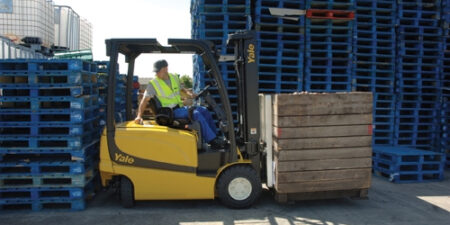
When picturing a forklift, we usually imagine a truck navigating tight warehouse aisles or lifting pallets in a chilly loading bay. But not all forklifts are created equal. Some are engineered for dry environments, while others are built to withstand the demands of outdoor work.
Understanding where and how to safely operate a forklift is essential to getting the right performance, minimizing downtime and protecting your crew.
Indoor Forklifts: Designed for Tight Spaces & Smooth Floors
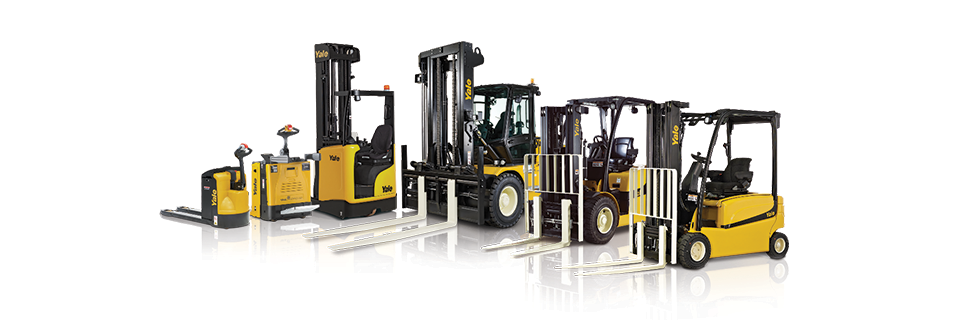
Indoor operations typically call for forklifts that are compact, agile and don’t emit fumes. Most electric indoor models produce zero emissions, which helps meet clean-air standards and improves indoor air quality. Some examples are:
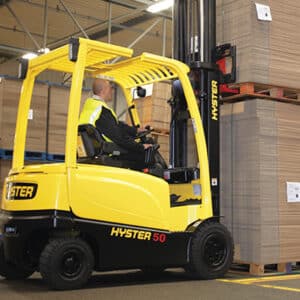
- Electric forklifts with cushion tires: Best suited for smooth concrete surfaces, cushion tire forklifts are compact and highly maneuverable. They’re ideal for warehouses and manufacturing plants.
- Stand-up riders and reach trucks: These are perfect for narrow aisles and high stacking in racked storage environments. They offer tight turning radiuses and efficient load handling in confined spaces.
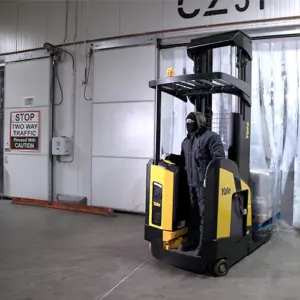
Outdoor Forklifts: Built for Rougher Conditions
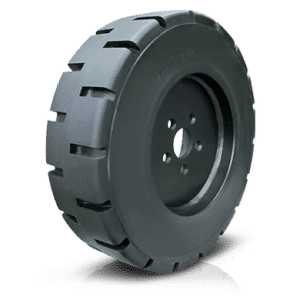
Outdoor environments add new challenges: uneven terrain, moisture, temperature extremes, and weather exposure. That’s where pneumatic tire forklifts come in—especially electric pneumatic forklifts, which combine the low-emission benefits of electric power with rugged outdoor performance.
Can Electric Forklifts Work Outside?
Yes—and many do. Brands like Yale offer 48V and 80V electric pneumatic models with capacities up to 17,500 lbs. These are designed to handle large loads and rough conditions, while reducing maintenance and fuel costs. But, before heading outside with your forklift, be sure to check the safety factors.
Look at the IP rating on the forklift’s data plate. “IP” stands for Ingress Protection, and it tells you how well the equipment is sealed against dust and water.
- The first digit (0–6) shows solid particle protection (like dirt or debris)
- The second digit (0–8) rates water protection (like rain or puddles)
For example, an IP54 rating offers some protection against dust and liquids—good for outdoor work in light weather. Higher ratings like IP66 are better suited for more extreme environments.
Can Electric Forklifts Run in the Rain?
Some electric forklifts can, but it depends on their IP rating. Even those built for outdoor use should never be submerged or operated in standing water. Check your operator’s manual or ask your dealer if your model is rated for wet conditions.
If your forklift is rated for outdoor use, follow these tips to keep your crew and equipment safe:
- Use headlights and horns during poor visibility events like rain and snow—or even at dusk.
- Slow down! Wet or uneven ground reduces traction.
- Make sure the cabin is enclosed to protect controls and electronics.
- Operators should wear weather-appropriate PPE, including hi-vis vests, rain gear and boots with good grip.
Need Help Deciding?
Choosing the right forklift means understanding both your environment and your workload. For help comparing electric vs IC or indoor vs outdoor models, connect with our sales team; they can walk you through real-world applications and ROI calculations.