
Battery Charging Systems
Do your current chargers keep up with your modern requirements?
Just because your charger turns on, doesn’t mean it is working for you - it could be only charging to 60%.
New technology and charging systems have a big impact on battery lifespan and runtime. Understanding the pros and cons of conventional charging, opportunity charging and fast charging is essential to get the productivity you need for your operations.
Identifying the right battery and charger options can reduce forklift downtime and save you money over the lifetime of the battery. And often, new battery chargers can pay for themselves in less than a year.
Start with a power study to determine which charging method is right for you.
What’s the difference between conventional, opportunity, and fast charging?
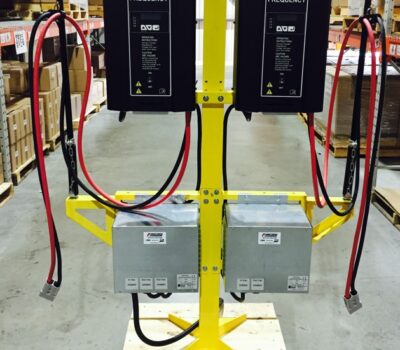
CONVENTIONAL CHARGING
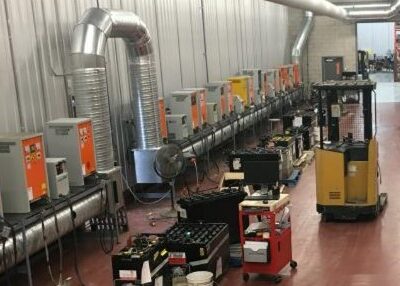
Conventional charging is best for single-shift operations where no battery change is needed. This also requires a designated battery space where charging and maintenance can be performed.
Depending on the operation, this could require considerable real estate and in multi-shift operations, you need multiple batteries per truck because batteries will need to be changed between shifts. Batteries charge for 8-10 hours followed by 6-8 hours of cooling before using the battery again.
Conventional chargers charge the battery to a 100% state of charge (SOC) each day.
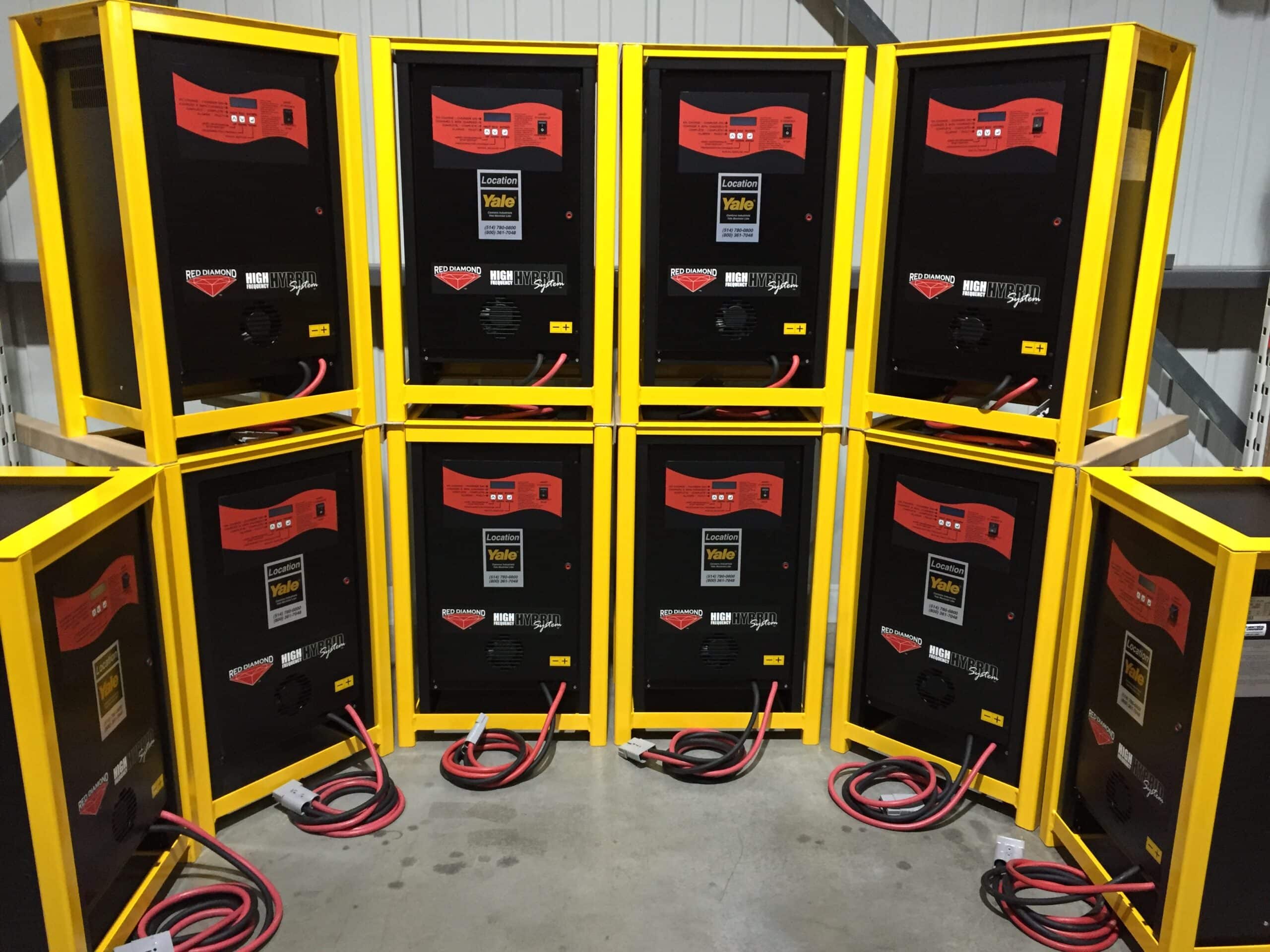
FAST CHARGING
Fast charging is best in multiple-shift or heavy-use operations. Batteries partially charge throughout the day during breaks and between shifts.
Fast charging doesn’t require changing batteries between shifts or large battery rooms. It also eliminates the need for additional batteries and improves productivity because the time spent changing batteries in multi-shift applications is eliminated
However, fast charging is harder on the overall life of the battery so it has to be replaced more often than a battery using conventional charging.
Batteries are charged to 80%-85% SOC daily.
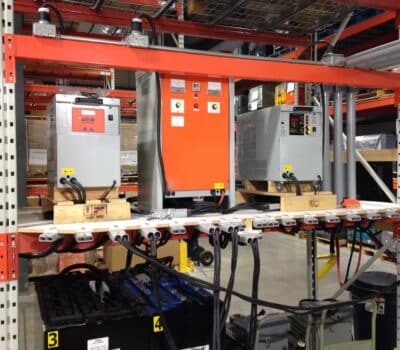
OPPORTUNITY CHARGING
Opportunity charging is the practice of charging a battery for short periods of time throughout the day - whenever it is convenient for operations. Opportunity charging has transformed forklift fleet management because it allows for the continuous use of a single battery throughout multiple shifts.
This is ideal for a multi-shift operation where there is no 8-hour downtime for battery charging. By installing chargers near work areas, it is easy to charge trucks throughout the day to maximize equipment uptime.
Chargers are normally set to charge a battery 80%-85% SOC. Once a week, the battery must be fully charged to equalize.
Ask your local power company about rebates for upgrading your chargers
News & Announcements
OMAHA, Neb. – The Better Business Bureau of the Midwest Plains has named Riekes Equipment a 2026 Torch Award for Ethics recipient, recognizing exceptional commitment to integrity and ethical business…
In 2026, Riekes Equipment will celebrate 90 years in business, marking nine decades of helping warehouses, manufacturers and distribution centers improve safety, productivity and performance. Founded in 1936, Riekes entered…