
Forklift Electrification
Making the Shift to Electric Lift Trucks
Switching from internal combustion engine (ICE) forklifts to electric is a significant decision. Understanding the costs, emissions and performance differences can help you make the best choice for your operation.
There are Cost Considerations
While the upfront cost of an electric forklift can be higher than that of a gas or diesel equivalent, the long-term savings can outweigh the initial investment. Electric forklifts have fewer moving parts, leading to reduced maintenance costs. Lithium-ion batteries, in particular, require no maintenance or equalization, helping lower the total cost of ownership.
Another key factor is the economic lifespan. A moderately used ICE forklift typically lasts around 10,000–12,000 hours, while with proper maintenance, lithium-ion forklifts often surpass that. And don’t forget energy prices, government incentives and local regulations should be factored into the cost analysis to determine overall savings.
For example, there are various state and federal programs offering grants, rebates, tax incentives and even carbon offset credits for businesses that invest in electric forklifts. Check with local government agencies to learn about financial incentives available in your area.
Making A Positive Environmental Impact
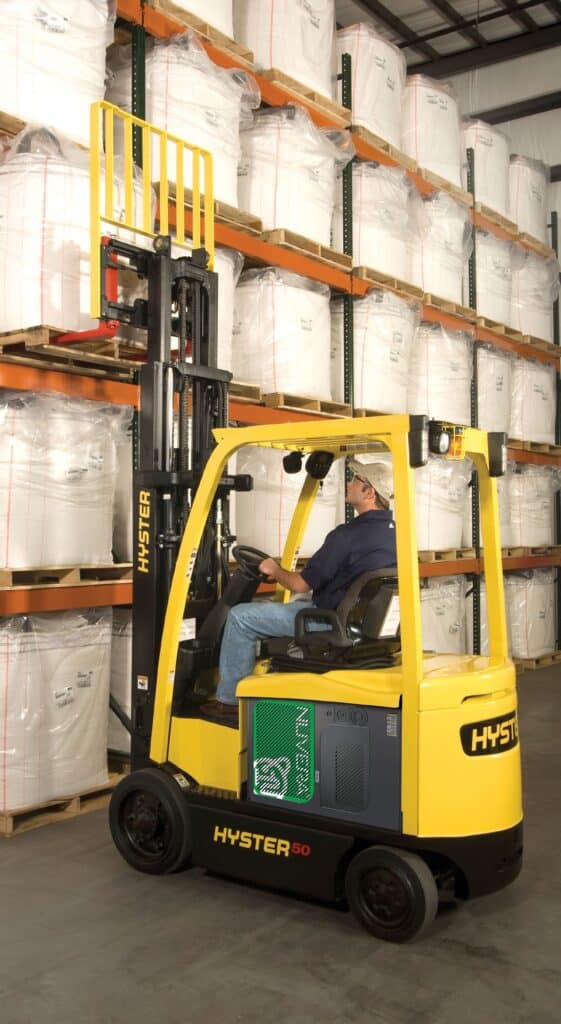
Electric forklifts powered by lithium-ion batteries produce zero tailpipe emissions. Lead acid batteries do not generate emissions during operation, but they do release fumes that require ventilation while charging.
In fact, the Occupational Safety and Health Administration (OSHA) mandates that carbon monoxide levels generated by powered industrial trucks must comply with exposure limits specified in standard 1910.1000. Electric forklifts eliminate harmful emissions that operators and other employees may come in contact with. Not to mention, electric models tend to be quieter enhancing the forklift operator comfort.
Switching to electric equipment can improve indoor air quality, drive a green mindset by providing a safer work environment and most importantly, help your business meet emissions regulations.
Going electric will help reduce greenhouse gas emissions and lower your company’s overall environmental impact compared to ICE models.
It’s About Performance & Productivity
Modern electric forklifts—especially those using lithium-ion batteries—deliver consistent power until depletion, making their performance comparable to ICE models.
Unlike traditional lead acid batteries, lithium-ion technology has a smaller, lighter form factor, tolerates high energy draw without overheating and provides greater energy density and longer service life.
Electric forklifts have fewer moving parts than gas or diesel forklifts, leading to less frequent maintenance and breakdowns, thus minimizing downtime. They also often have lower operating costs due to lower maintenance requirements and reduced fuel consumption (electricity is often cheaper than fuel).
Heavy Loads are no Problem
And with new technology in electric truck, there is no need to worry about heavy loads.
Electric forklifts can lift the same, or sometimes even slightly more, weight to the same heights as ICE models. Their heavier battery positioning can improve stability, making them well-suited for high-lifting applications. However, performance varies depending on the specific forklift model and application requirements.Electric forklifts can even use the same attachments as ICE models. The front-end architecture of electric forklifts follows industry standards, ensuring compatibility with most attachments.
While ICE forklifts have long been the go-to choice for outdoor operations due to their durability, electric forklifts are proving to be just as capable. Lithium-ion batteries perform well in both hot and cold environments, ensuring consistent operation across multiple shifts. Plus, lithium-ion forklifts often feature sealed battery housings that protect against moisture, making them suitable for even demanding outdoor conditions.
The Bottom Line
Electric forklifts offer numerous advantages, from lower operating costs to environmental benefits and high-performance capabilities. If you're considering making the switch, evaluating factors such as costs, energy incentives and operational needs will help determine if electrification is the right fit for your fleet.
Would you like to explore the benefits of electric forklifts for your specific operation?
Reach out to one of our expert to better understand the best solution for your business.