How to Master Pallet Racking, Part 2
A Comprehensive Guide to Warehouse Racking
In the first half of the blog, we covered some of the things that need considered when designing a new warehouse. Today, we're diving deeper into the various types of racks, their strengths and weaknesses and some special considerations for each one.
It is important to note that there is no single racking solution that fits every application. Throughput, density, FIFO, LIFO and many other things need to be considered to determine the optimal design. It is even common to use multiple racking solutions in the same facility to best accommodate all the loads types that need to be stored. So, let’s dive into each of the rack systems:
Single-Deep Selective Rack
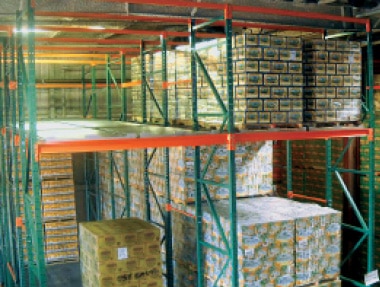
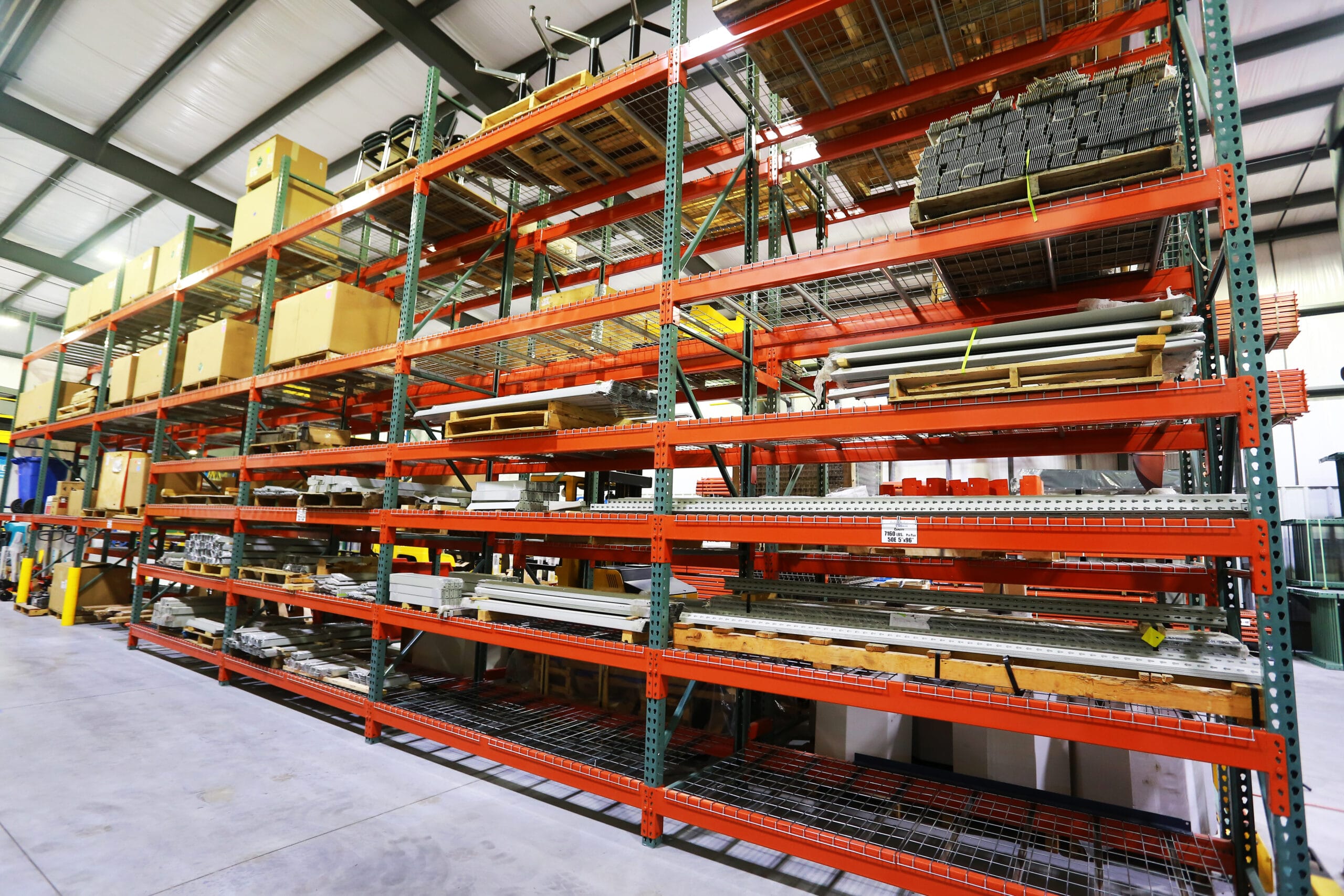
Selective rack is by far the most common rack in warehouses. Some features and advantages of selective rack include:
- Every pallet faces the aisle, so it has 100% selectability of pallets. This makes it perfect for FIFO and high throughput.
- Diverse styles. Most customers use teardrop style roll-formed racks, but there are many manufacturers and styles available.
- Cost Effective. Selective rack typically has the lowest cost per pallet position.
- It works with any type of forklift, so no specialty equipment is needed.
However, selective rack also has some disadvantages:
- Storage density. Because every pallet faces the aisle, there is no depth of storage. An aisle is required between every rack, which leads to more aisles and potentially lost storage space.
- Potentially higher storage cost. Because it takes up more space, selective racking may lead to needing a larger warehouse or even using offsite storage for overflow.
- No storage depth. Selective rack can be less efficient for storing large quantities of the same or similar products.
Double-Deep Selective Rack
Double-deep selective rack is identical to selective rack, except it stores pallets two-deep (four-deep in back-to-back racks). Advantages include all the above advantages of selective rack, plus:
- Up to 50% fewer aisles, resulting in more pallets stored in the same amount of space.
- More efficient storage of high-volume SKUs.
Some disadvantages of double-deep selective rack include:
- It requires a special forklift known as a double reach truck, or deep reach truck. This forklift is dedicated to this application and is not effective for dock use or other applications in the warehouse.
- Potentially affects FIFO, since pallets are stored two-deep.
- Can create honeycombing, or unusable pallet slots inside the racks.
- Reduced throughput and additional pallet handling, since the rear pallet is not accessible from the aisle.
- Special Requirements. Double-deep selective rack requires either the first beam level above the floor so the outriggers can fit under pallets or a wider bay to accommodate the outriggers straddling the pallet. This may result in potential lost pallet spaces due to limited ceiling height or a decreased number of pallets in each row.
Drive-In/Drive-Through Rack
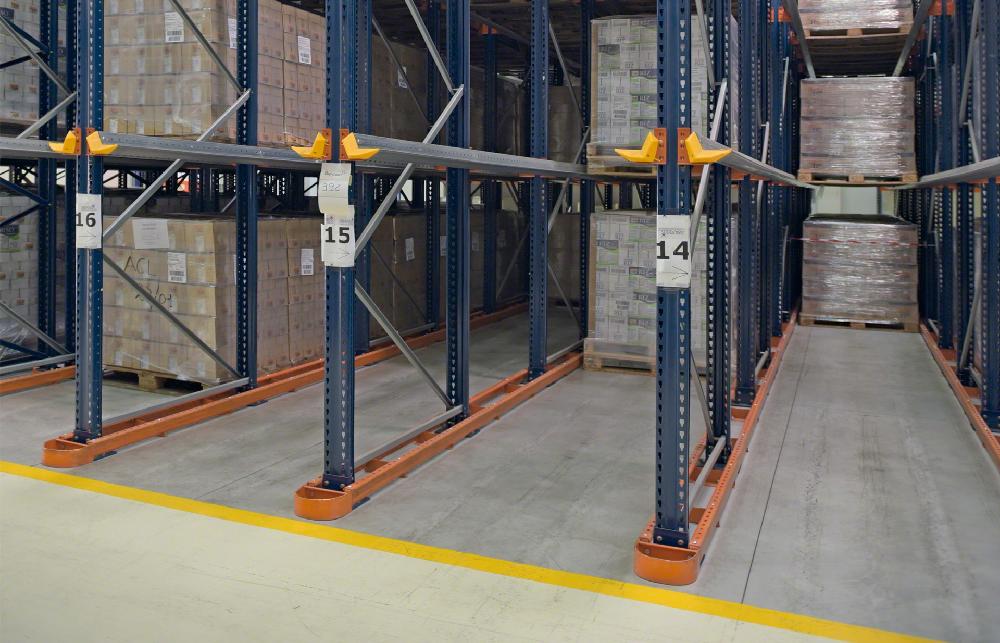
Drive-in rack is well suited to very dense storage. It is most effective when you have a high volume of certain SKUs and FIFO is not needed. It is particularly effective for things like flat corrugated boxes, packaging materials or bulk quantities of wood, steel or plastic. It is also commonly used in coolers and freezers, since the shelf life of products is prolonged in these applications. I strongly recommend structural rack for drive-in racking due to its increased strength. Forklifts will come in contact with the rack, so you need a durable system.
Some advantages include:
- High density storage, from 2 to 10+ pallets deep. This eliminates aisles so you can fit more pallets in the same amount of space.
- Low cost per pallet position.
- LIFO inventory management works well for products that have low turnover and don’t have a need for stock rotation.
Disadvantages include:
- No FIFO capability.
- Modification of equipment. Drive In racking requires a forklift with an overhead guard that can fit between the racks. Many stand-up forklifts will fit without modification, but most sit-down forklifts require a modified overhead guard, which adds additional cost.
- Limited product variety. All items in each bay must be the same SKU. If not, there will be significant additional handling of pallets.
- Pallet Quality. Pallets must be in very good condition. Broken or weak boards can create a dangerous situation.
- No variation in pallet size. Pallet sizes must be consistent, since they are designed for a specific width of pallet.
- Increased risk of damage. The forklift is likely to come in contact with the rack.
- High risk of honeycombing inside the rack.
Drive-through is a variation of drive-in rack. The only difference is that it is accessible from both sides. This theoretically adds FIFO capability to a dense storage system. But this creates lots of honeycombing, since pallets that are removed from the rack cannot be easily replaced until other pallets are moved forward to replace them. This is best suited to entire truckloads, where all the pallets will be loaded into a single bay and will then be unloaded at the same time.
Pushback Rack
Pushback racks are another form of a dense storage system. Pushback racking can be 2-5 pallets deep. It uses a series of carts and rails to support the pallets, with the carts nested at the front of the system. The first pallet sits on a cart. When the second pallet is inserted, you push back the cart and set the next pallet in place, either on another cart or the rails. The final pallet always sits on the rails. Then, when a pallet is removed, the other pallets flow forward with gravity. The advantages of a push-back rack include:
- It is a dense storage system, up to 5 pallets deep. Pallet weight and system height determine the allowable pallet depth.
- All pallets are accessible from the aisle, so no special forklift equipment is required.
- More flexibility. Two or three SKUs can be placed side by side in the same bay, so there is more flexibility than with drive-in.
- There is reduced damage, since forklifts do not need to drive into the rack.
- More flexible with different pallet sizes.
Disadvantages include:
- High cost per pallet position.
- LIFO, not FIFO. The first pallet placed in the rack will be the last pallet out.
Note that two and three deep systems can sometimes be considered FIFO if multiple pallets of each SKU are shipped together.
- Increased honeycombing due to empty spots in the back when pallets are removed.
- Pallet conditions are critical. Broken boards can jam the system, resulting in reduced productivity and safety concerns.
- Less picking efficiency, since pallets in the rear are not accessible.
Pallet Flow Rack
Pallet flow racks provide a very dense storage system with true FIFO. The system is loaded from the back. Pallets then flow to the front using gravity and then pallets are unloaded from the front. This can be highly effective for customers that want to stage entire truckloads for shipping, and for customers that have high volumes of single SKUs that require FIFO. A flour manufacturer is a good example. They produce massive volumes of the same product, have intense storage needs and require FIFO to ensure the first product made is the first product shipped. Advantages of pallet flow racking includes:
- Extremely dense storage, up to 24-26 pallets deep.
- True FIFO.
- All pallets are accessible from the aisle, so no special forklift equipment is required.
- Two or three SKUs can be placed side by side in the same bay, so there is more flexibility than with drive-in.
- Increased throughput. Infeed and discharge aisles are separate, so there are no forklift conflicts in the aisles.
- Good ROI. Initial cost is high, but density and efficiency quickly make up for the cost.
Disadvantages include:
- High initial cost per pallet position.
- Loss of pallet positions. The first beam must be off the ground, and the rear beams are higher than the front beams due to gravity requirements. This can cause loss of vertical pallet positions due to ceiling height restrictions and/or forklift lift height capabilities. However, the density gained often offsets any lost pallet spaces.
- Pallet quality and consistency are critical. Broken boards can jam the system, creating productivity and safety issues.
- Limited selectivity. You can only have one SKU per lane.
- Potential for honeycombing, but less than drive-in and pushback.
- Needs product turns. While great for fast moving items, it is less suitable for slow moving items.
Automated Rack/Shuttle Systems
For the ultimate in storage density and throughput, automated rack systems cannot be beat. Bi-directional or omni-directional shuttle systems outperform all other dense storage systems.
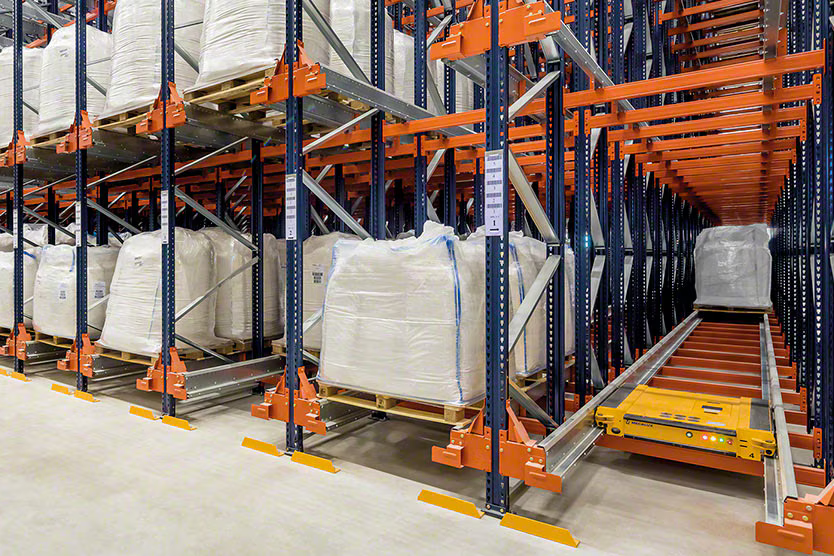
Bi-directional systems only run front to back and/or back to front. A pallet is placed on the shuttle, and then the shuttle transports the pallet to the deepest storage position. It will then sequence pallets from back to front as more pallets are placed in the system. Pallets are then retrieved in reverse order. Shuttles are typically moved from lane to lane by forklifts, and each shuttle can service several lanes. Movement is controlled by the forklift operator via a wireless FOB.
Omni-directional shuttles are virtually fully automated. They are driven by software that interacts with the customers Warehouse Management System (WMS). Pallets are introduced into the system via a Vertical Lift Module (VLM). The WMS determines the pallet location, and then the VLM raises the pallet to the appropriate level. The omni-directional shuttle then travels horizontally to the correct lane, turns 90 degrees and travels down the lane and places the pallet in its assigned position. Retrieval of pallets is also controlled by the WMS and happens in the reverse order of the infeed of pallets.
These advanced shuttle systems ensure FIFO while providing extremely dense storage. They can also automatically replenish pick locations, monitoring inventory levels and automatically delivering a full pallet to empty pick positions. Advantages of automated storage and racking systems include:
- Extremely high density, with unlimited depth of storage lanes and no loss of vertical space due to gravity requirements.
- Increased productivity. Shuttles automatically place and retrieve pallets, allowing forklift operators to move on to more value-added tasks. They also offer faster handling times. Multiple shuttles can operate simultaneously, further enhancing productivity.
- Cost savings. There is a reduced need for forklifts and operators. There is lower energy cost in cold storage systems due to more dense storage. There is less damage to pallets and racks due to less interaction with forklifts.
- Enhanced Safety. Fewer forklifts and operators interacting with pallets and pedestrians. Precise handling of pallets results in less risk of dropped or spilled pallets.
- Can operate either as FIFO or LIFO inventory management methods. Can adapt to a variety of pallet sizes and shapes.
- They can also be combined with pallet conveyors and/or AGVs or AMRs to eliminate forklifts and operators and fully automate pallet handling.
Disadvantages of automated storage and racking systems include:
- Higher upfront cost. Although this is often justified through a quick ROI.
- Requires software. The fully automated system must be driven by a WMS. Depending on your system’s capabilities, software cost and time to implement can be prohibitive.
- Maintenance costs. Shuttles have moving parts and must be maintained. Although this is typically less than maintaining a fleet of forklifts. If a shuttle breaks down while inside the system, retrieval and repairs can be a challenge.
- Battery charging. Shuttles must be charged. Advanced systems have smart shuttles that automatically return to charging area when batteries are low, or chargers built into shuttle docking stations. Charging will also add electrical cost.
- Height limitations. Pallets must be able to successfully move through the system. If they are too tall, they can get stuck. Advanced systems will detect pallet heights and reject over-height pallets.
As you can see, there are many options available to optimize your specific application. Choosing the right racking system is critical to maximizing your warehouse space, streamlining operations and hitting your productivity targets. Each option has its strengths, but success comes down to matching the right solution to your workflow, product mix and storage goals.
Engage a professional early in the process. It can be difficult or impossible to maximize an existing space or an improperly designed space due to things like building columns, improperly placed doors, lights, and heaters. Working with us upfront, before building designs are finalized, can prevent these mistakes from happening.
If you’re not sure which direction to go, let’s talk. Our team can walk your space, analyze your needs and design a custom system that works for you now - and grows with you later.