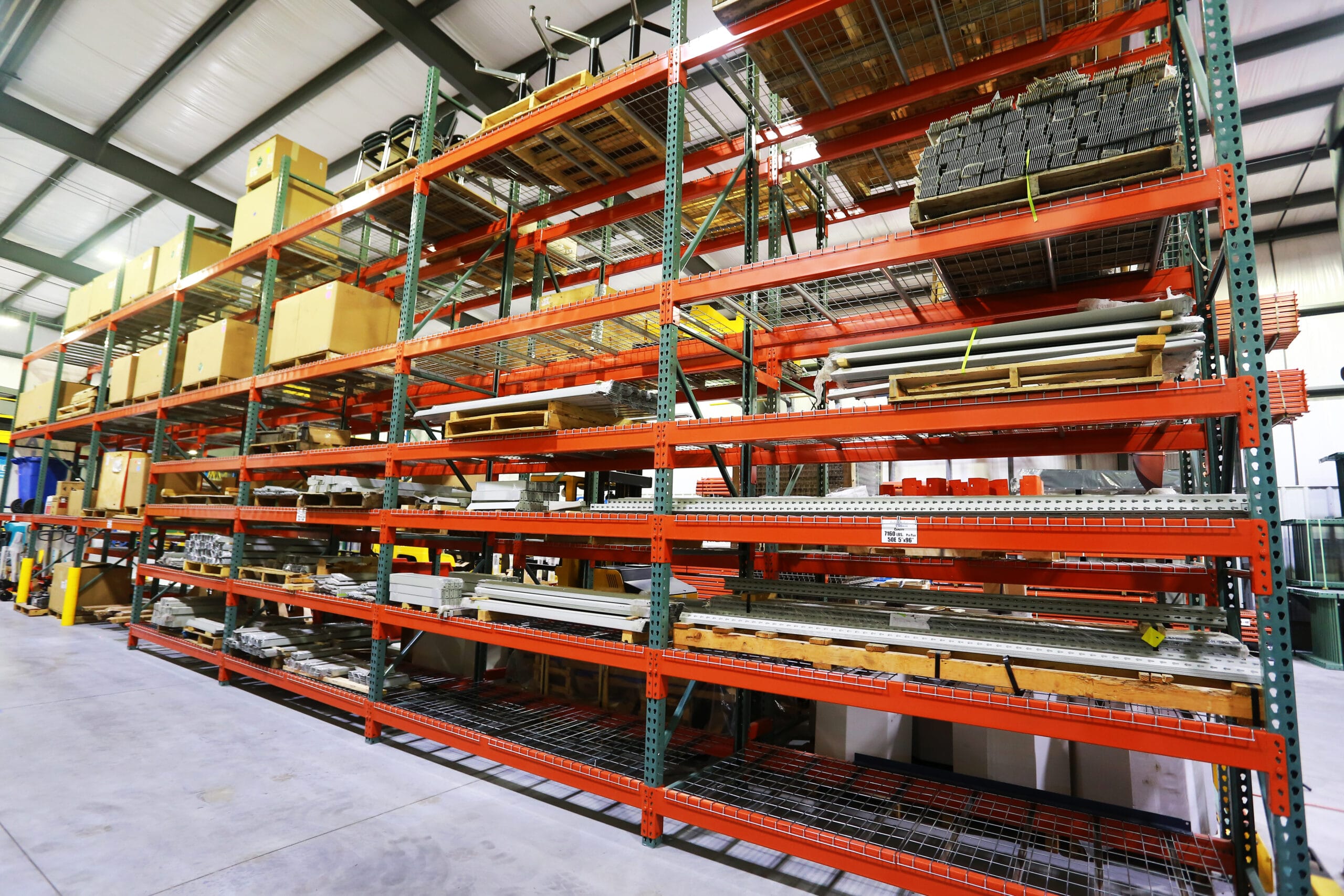
How to Master Pallet Racking, Part 1
A Comprehensive Guide to Warehouse Racking
When it comes to efficient warehouse storage solutions, pallet racking is the backbone of industrial logistics. Whether you are optimizing warehouse space or reducing product damage, understanding the nuances of pallet racking systems can save you time, money and sometimes even headaches!
This two-part series will dive deep into everything you need to know about pallet racking systems, starting with the essentials: the application, the types of racking, components and best practices for maximizing capacity and safety.
Understanding The Basics
There is no one-size-fits-all solution when it comes to pallet racking. Depending on the specific requirements of your operation, different systems serve different needs. But before we design a system, we need to understand more about the application.
Everything Starts With The Load
To design an effective racking system, it is important to understand the loads it will store. It starts with the pallet specifications - length, width, height, and weight. And although most pallets are 48” long x 40” wide, there are many more pallets used today. You also need to identify all the sizes and weights of pallets you need to store as well as the load size, which can be different than the pallet size. Many loads will be larger than the pallet, overlapping on the sides or the front and back. And the goal is that all loads must be able to fit in the rack.
Density And Throughput
Once the physical parameters of the loads have been identified, the next step is to understand the flow of materials in your facility.
- How many SKUs, the quantity of pallets for each SKU, how quickly they turn, etc.
- Is First-In, First-Out (FIFO) important?
- Or is Last-In, First-Out (LIFO) acceptable?
A dense storage system is great for storing a lot of pallets, but if you need 100% selectability of pallets or require FIFO, you cannot bury one pallet behind many others.
The bottom line is that there is no single rack system that is perfect for every application.
At Riekes, we often recommend using a combination of rack types in the same application to accommodate different requirements. In the end, the goal is to provide a system that safely stores all your products while meeting your density and throughput requirements.
A properly designed system will involve:
- A thorough survey of your facility
- CAD design to optimize the layout
- Selection of appropriate forklift equipment to best reach your goals
- Implementation
- Training to ensure everyone understands how to operate correctly and safely
Understanding Density
A “typical” warehouse rack system uses selective rack. This design normally has a single row of rack against the wall, then an aisle for the forklift to travel. It then alternates back-to-back rack with another aisle. This is excellent for selectability and FIFO. Any pallet can be retrieved at any time. But it is the least effective use of space if density is your goal.
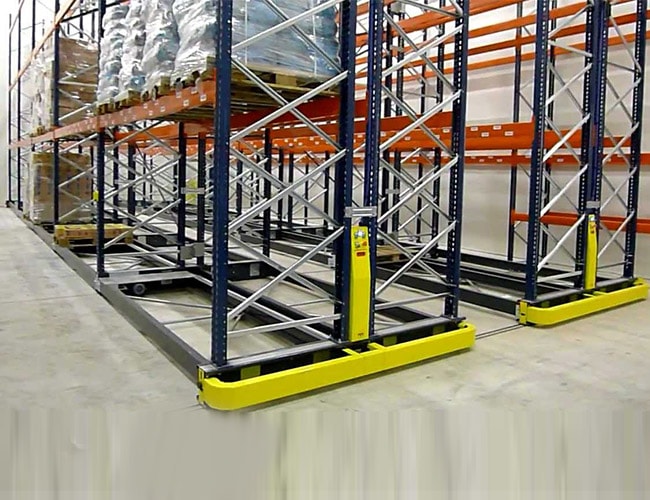
There are many types of rack that increase density, which will all be reviewed in the second half of this blog. But each has the same goal – fit more pallets in the same space. Or use less space to store the same or more pallets.
As you think about the selective rack described in the first paragraph, there are lots of aisles required to make every pallet accessible. If each rack is two deep, 50% of the aisles can be eliminated. As the depth of the system is increased to three, four, five or even deeper, the number of aisles needed is significantly reduced. This allows you to fill that space with additional pallets.
By going to a dense rack system, you can increase storage density by 25-50%.
However, there are also weaknesses and trade-offs to a deep rack system:
- Selectability of pallets is reduced. This happens because pallets ate buried behind other pallets. This is fine if there is some depth in each SKU and FIFO is not needed. But it can be a deal breaker if pallet selection or FIFO are important.
- The number of accessible SKUs may be reduced. All pallets in each pallet position or bay must be the same pallet. Mixing pallets will cause increased pallet handling and reduce productivity.
- The potential for honeycombing is increased. Honeycombing describes unused pallet spaces or empty pockets within the storage structure. Think of a bee’s honeycomb, with some pockets filled and some empty. That is how the rack could look.
- Some deep rack systems require pallet consistency and for pallets to be in good condition. For instance, all pallets in a drive-in rack system must be the same size, it cannot accommodate varying pallet sizes. Broken boards on pallets can be unsafe and cause systems to get jammed, resulting in reduced productivity and potential safety issues in trying to unjam the system.
- Special forklift equipment may be needed. Drive-in racks may require forklifts to be modified to drive inside the rack. Deep rack systems are often combined with narrower aisles to save even more space. This may require different forklifts that are designed to work in narrow aisles. This also dedicates these special forklifts to the warehouse and may result in the need for increased quantities of equipment to service the docks and transport pallets between the dock and warehouse.
Understanding Throughput
Throughput refers to the rate at which goods are processed through the warehouse. Products are often classified as A, B, C, or D.
- A’s are the fastest movers and are often located low to the ground and towards the front of the warehouse.
- B’s and C’s move a little slower.
- D’s are very slow moving and are usually in the back of the warehouse and up high in the rack.
When throughput is important, it is critical that we design the warehouse for maximum velocity.
Using single-deep selective rack typically results in the greatest throughput. Every pallet is available from the face of the aisle. Deep systems typically result in less throughput. Forklift operators must take more time to retrieve pallets that are not easily accessible from the face of the aisle.
Putting it All Together
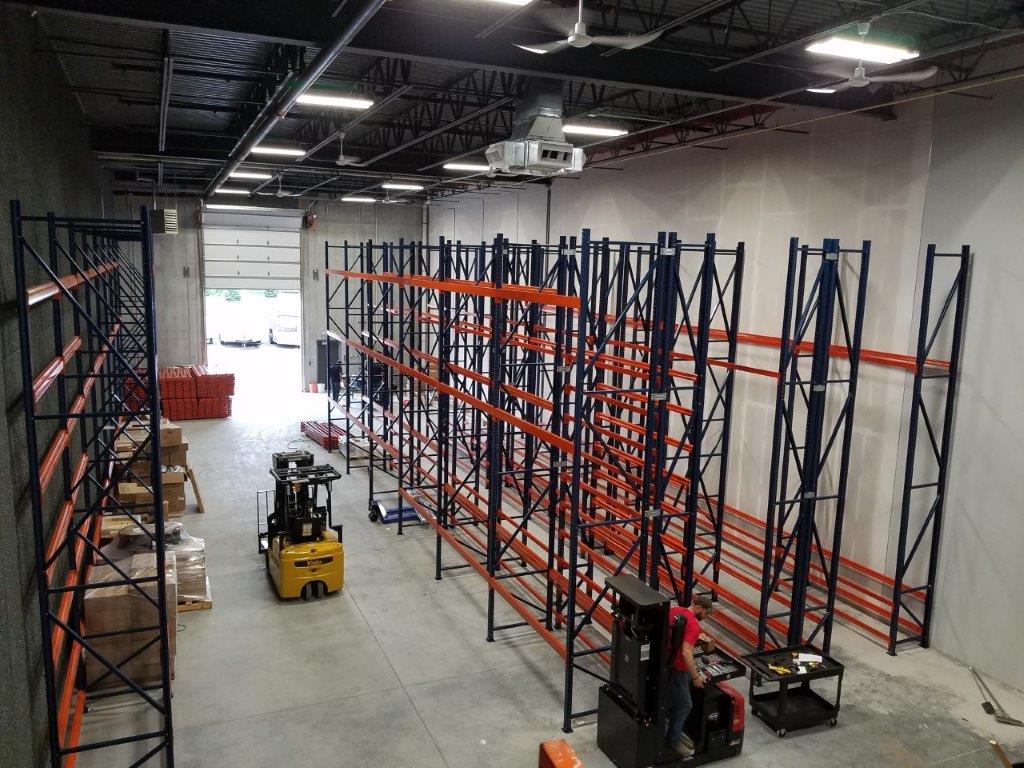
A well-designed warehouse will take all these factors into account. The goal is to achieve storage goals while maximizing throughput. Our Consultants often blend multiple rack styles in the same space, allowing for high throughput and velocity in the picking areas where it is needed, and more density in the areas where there needs to be more depth of product and need to store more materials. Especially when FIFO is not needed.
It is also critical to pair equipment recommendations with the rack to ensure that the entire system is as efficient as possible.
If you are considering building a new building or adding on to an existing building, I strongly encourage you to engage a consultant early.
Our Team often finds that things like building columns, doors, lights, heaters and other structural components can inadvertently be placed in less than optimum places.
By engaging a warehouse consultant early, the optimum warehouse space can be designed. Consultants work with your architect to ensure that building columns are buried in flue spaces in the rack, doors are not blocked by racks, lights and that heaters are in the center of the aisle – all things that can impact your final productivity.
With the right partner, you can have a completed project that is 100% maximized and has zero wasted space because the warehouse was designed for optimum efficiency before the building design was finalized.
Stay tuned for Part Two, which will go deeper into each type of rack system and review the strengths and weaknesses of each.