National Emphasis Program (NEP) Preparation: Safety Strategies for OSHA Inspections
Understanding National Emphasis Program (NEP) to make your warehouse safer
What is Culture? In business, culture means shared ideas, goals and practices that define a company’s value system. If you want to create a culture of safety in your warehouse, everyone needs to agree that keeping your team safe is a top priority.
In July of 2023, growing concerns about safety in the workplace led to the launch of a National Emphasis Program (NEP) focused on warehouses, processing facilities, and distribution centers. The Department of Labor elaborates on their website (dol.gov): “Under this three-year emphasis program, OSHA will conduct comprehensive safety inspections focused on hazards related to powered industrial vehicle operations, material handling and storage, walking and working surfaces, means of egress and fire protection. The program will also include inspections of retail establishments with high injury rates with a focus on storage and loading areas; however, OSHA may expand an inspection’s scope when evidence shows that violations may exist in other areas of the establishment.”
Now extended to April 10, 2031, you may be wondering how NEP is going.
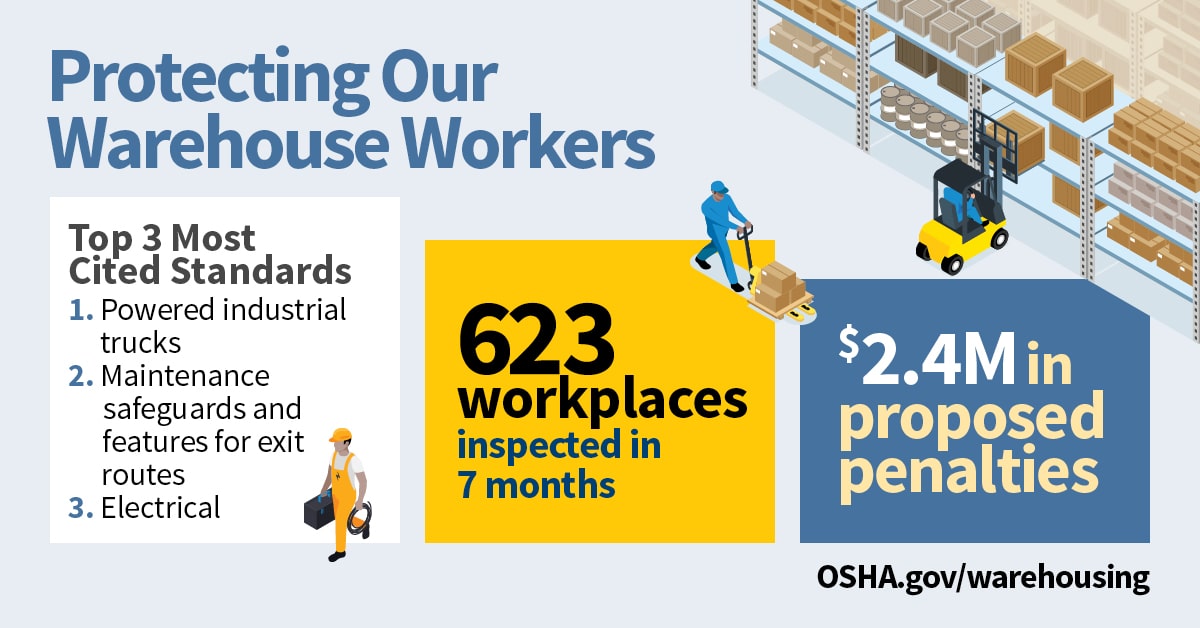
According to OSHA “In 2023, OSHA conducted 34,221 inspections, including 18,377 unprogrammed inspections, which includes employee complaints, injuries/fatalities and referrals. Of these 34,221 inspections, 15,844 were programmed inspections that focused OSHA's enforcement resources on industries and operations where known hazards exist (e.g., heat, respirable silica, combustible dusts, chemical processing, and falls in construction).”
While these inspection statistics are not dramatically higher than in the pre-pandemic years, with an increasingly inexperienced workforce stepping into roles generally held by seasoned employees, safety training, operator knowledge and reliable equipment makes a big difference when OSHA stops by for a visit.
WHAT THEY ARE LOOKING FOR
When a certified OSHA representative inspects a business, they first meet with the management and go over their plan for the day. The manager selects an employee to act as a host and guide for the representative as they do a walk-through of the property. The representative speaks privately to several employees, asking questions about the company’s safety procedures, training opportunities, access to personal protective equipment and more.
Here are some other items OSHA often checks for safety:
- OSHA 300 logs (detailing work-related injuries and illnesses)
- PIT operation (powered industrial trucks)
- Hazards (causing harm, adverse health effects or damage to property)
- Material handling (secure storage, bumper blocks on rolling equipment, etc.)
- Fall protection (i.e., guardrails near ditches, pits, or tanks)
- Egress (safe paths of travel in case of evacuation)
- Fire suppression and protection.
- Ergonomics (tools and workstations designed to reduce worker injury)
- Heat/cold stress (proper attire and hydration protocols for team members)
- Loading and unloading areas (i.e., vehicle, forklift and load safety)
At the end of the day, the OSHA rep presents observations and concerns to the manager, they discuss next steps and an official report is filed. Based on the findings, there may be educational programs and compliance assistance offered to address safety concerns. And fines may be levied for violations.
Ultimately, being prepared, safe and avoiding financial loss is the goal. Employers who have a culture of safety want the work environment to be safe all the time, whether an inspection is on the calendar or not.
WHAT YOU CAN DO
When a certified OSHA representative inspects a business, they first meet with the management and go over their plan for the day. The manager selects an employee to act as a host and guide for the representative as they do a walk-through of the property. The representative speaks privately to several employees, asking questions about the company’s safety procedures, training opportunities, access to personal protective equipment and more.
Communication, training and technology build a culture of safety that becomes second nature to your team.
Start with communication. Begin with an idea everyone can agree on and let leadership set the tone. If management is positive and pro-change, the team will more likely get on board. Avoid ultimatums and show genuine care—after all, these people drive your business forward every day; respect goes a long way.
Do not act as the safety police—no one is trying to catch team members doing something wrong. People don’t like to feel spied on, and they are less likely to engage in important conversations if they feel like they will get in trouble.
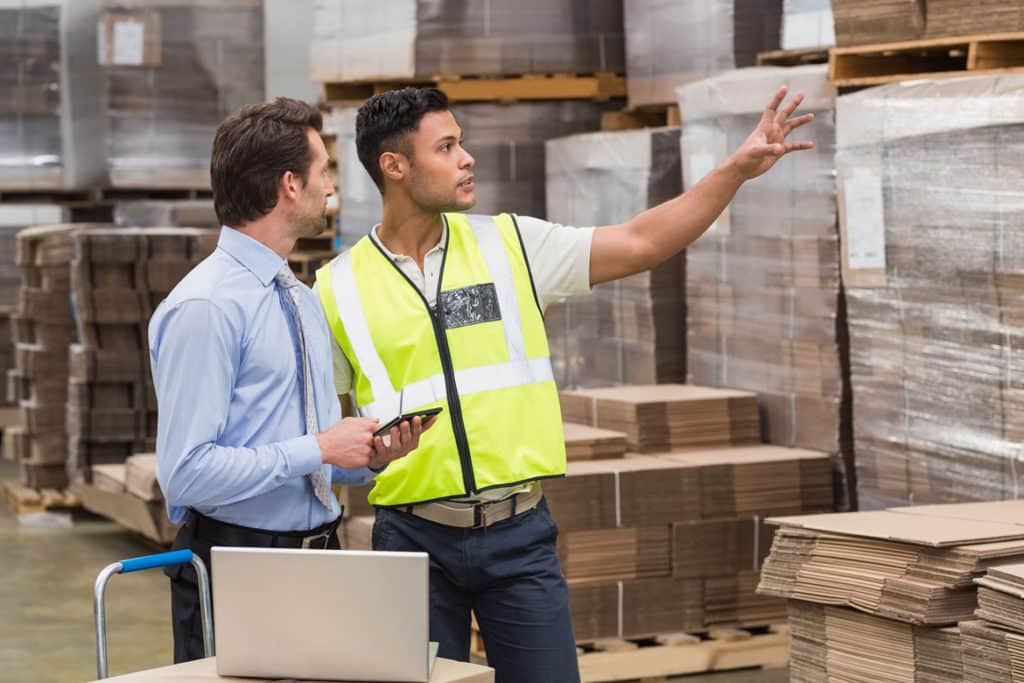
Be proactive. Visit the warehouse floor; listen to everyone’s input, ideas and concerns. Talking about safety openly and honestly across the whole organization is a healthy business goal.
Consider these important questions: Can employees stop working if they feel like something is wrong? Are they encouraged to bring up concerns? Is there positive reinforcement for safe behavior?
Lots and lots of training—whether it is an online course through OSHA, or an in-person class offered by companies like Riekes Equipment in Omaha, NE, proper certification for operators is a vital component of NEP compliance and safety. Both the cost and time commitment are surprisingly low given the value of training not only in safety-related savings, but in job efficiency and skills-based knowledge for your operators.
Hands-on experience helps build skill, especially when the information is tailored to materials and machines used in the operator’s own workplace. Quality training is important so check that your instructors are experienced, knowledgeable and well-trained.
Make sure training is offered often and that training time is paid time. Your team and your business are worth the investment to be the best it can be.
Don’t forget technology—it sounds simple, but sometimes even the most obvious things get overlooked in the middle of a busy work environment. Do not worry, there are solutions for that, too. Operator assist systems (OAS) apply new technology to old warehouse problems to get positive results. Did you know that more than 62,000 forklift accidents happen every year? The goal of OAS is to keep operators in control, while reducing that number significantly.
What’s your next step? Building a culture of safety in your business begins with a combination of open communication, skills-based training and investing in products and technology. Learn more today by visiting Riekes Equipment Safety & Ergonomics
Based on Yale® Lift Truck Technologies Webinar