Integrated Forklift Safety Programs Protect Your Workforce and Assets
Reduce costs and boost employee performance with a comprehensive lift truck safety program
Today’s fast turn, customer satisfaction-driven economy puts more pressure than ever on distribution center employees to meet productivity goals. Tight order fulfillment deadlines and complicated picks combined with throughput-based incentives, could cause operators to forget safe operating procedures.
According to the Occupational Safety and Health Administration (OSHA), businesses spend about $170 billion per year on costs related to occupational injuries and illnesses – expenditures that come directly out of company profits. However, workplaces that establish safety and health management systems can reduce their injury and illness costs by 20 to 40 percent.
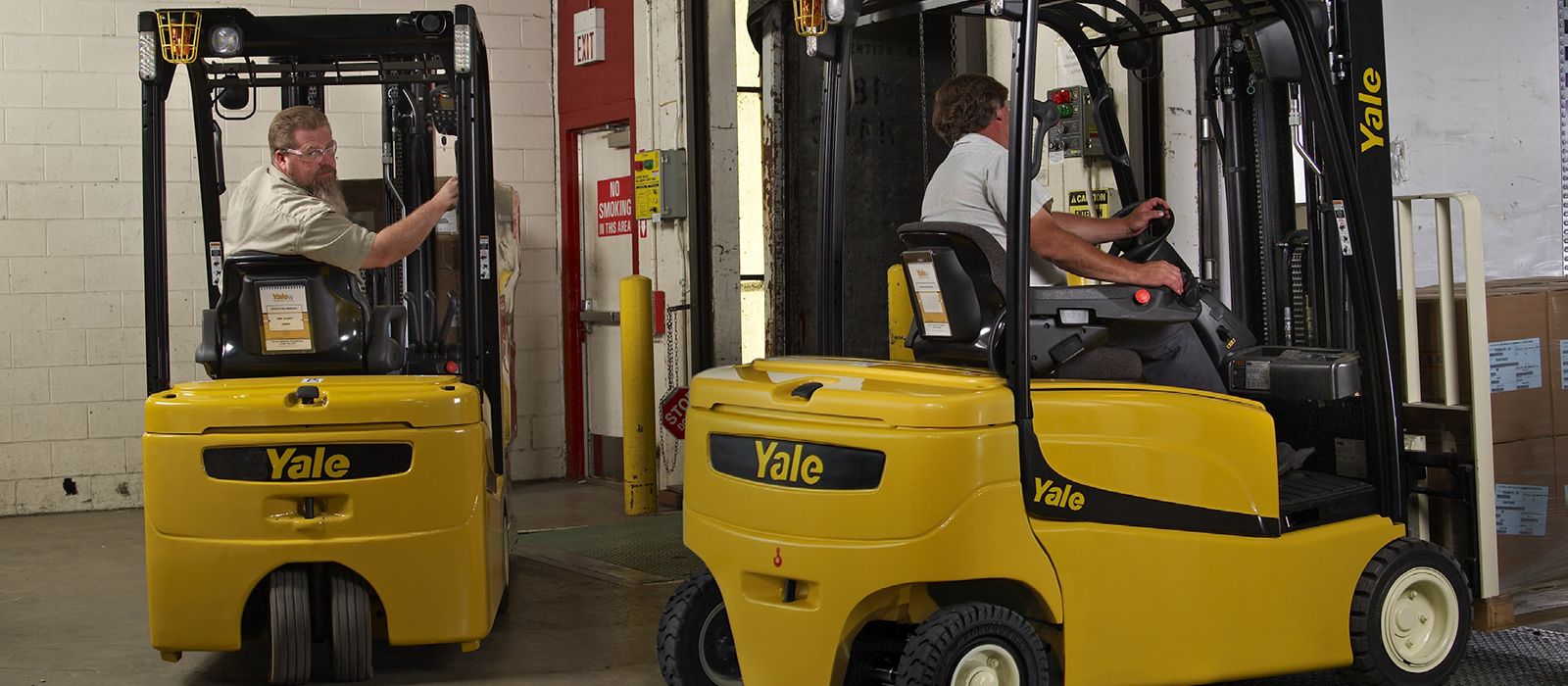
This white paper offers a step-by-step approach to fostering a healthier, safer workplace through training, proper maintenance, and operator-friendly lift truck features.
hire the right people
Many human resource managers are not knowledgeable about the different types of skills and qualifications necessary to properly handle a lift truck. Since lift trucks are available in several equipment classes, and previous experience as a lift truck operator is not enough to ensure proper qualification, employers must carefully evaluate and match candidates’ experience levels with the type of trucks they are expected to operate.
make training a priority
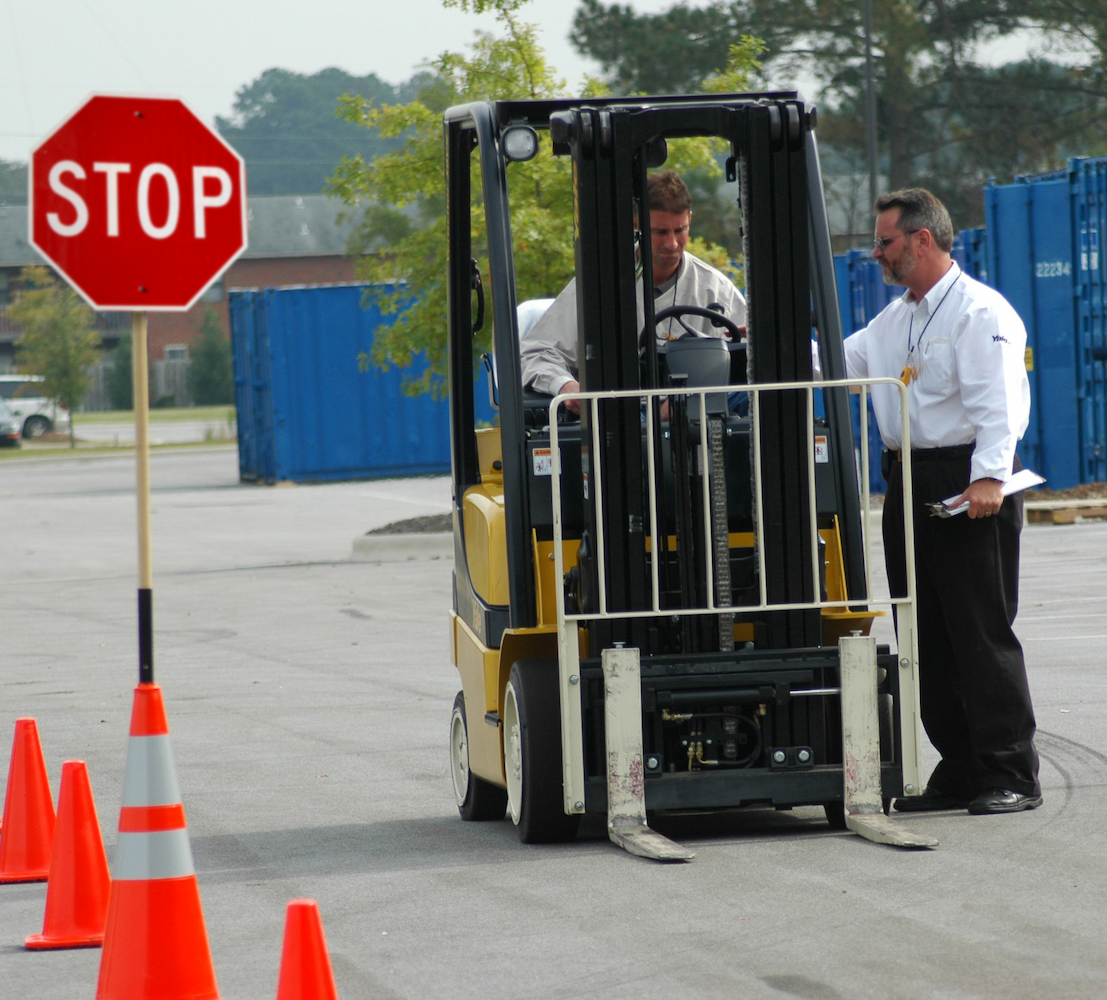
After hiring qualified lift truck operators, employers’ onboarding process must include ongoing, comprehensive training. Operators with poor or insufficient training can create unsafe situations for themselves and coworkers, and reduce their ability to meet productivity standards. According to the National Safety Council, operator error accounts for 70 percent of lift truck accidents. With more effective forklift operator training, accident rates may be reduced by 25-30 percent, keeping throughput high and downtime low.
To foster a culture of safety, organizations need to take additional steps. Employees should receive operator training for powered industrial trucks that adhere to OSHA standards which are site-specific, truck-specific, and application-specific. For example, a lift truck operator who works primarily in narrow aisles should receive training on narrow aisle trucks within the intended work environment.
Another essential element to any training program is hands-on safety demonstrations and instruction. Videos and classroom environments alone are not sufficient. Assigning an experienced mentor to work closely with new hires during training sessions is an ideal way to provide leadership and a resource to answer questions, increasing the chances of a successful onboarding period. This practice helps ensure that important legacy knowledge is passed on to new hires, enabling them to meet increasing performance standards while respecting safety protocol.
Beyond the operator, pedestrians should also be aware of how to interact with a forklift safely. It is beneficial to have these employees review portions of the operator training that address pedestrian safety. Additionally, pedestrian signs should provide warnings in areas where lift trucks operate and, whenever feasible, there should be separate travel zones for pedestrians and trucks.
A Comprehensive, One-Stop Source for Complete Operator Training
Yale is committed to helping lift truck operators receive the proper training needed to help ensure safer lift truck operations. The Yale® Handle with Care Operator Training Program offers a comprehensive, one-stop source for complete lift truck operator training. Available in both English- and Spanish-language versions, the training includes a complete DVD-based program that covers all five lift truck product classes, as well as the tools necessary for tailored operator training. Yale’s operator training can help:
- Reduce lift truck downtime
- Improve driver efficiency
- Minimize product damage and accidents
- Improve the company’s bottom line
- Limit lost-time injuries
Don’t Skimp on Maintenance
It’s the Law!
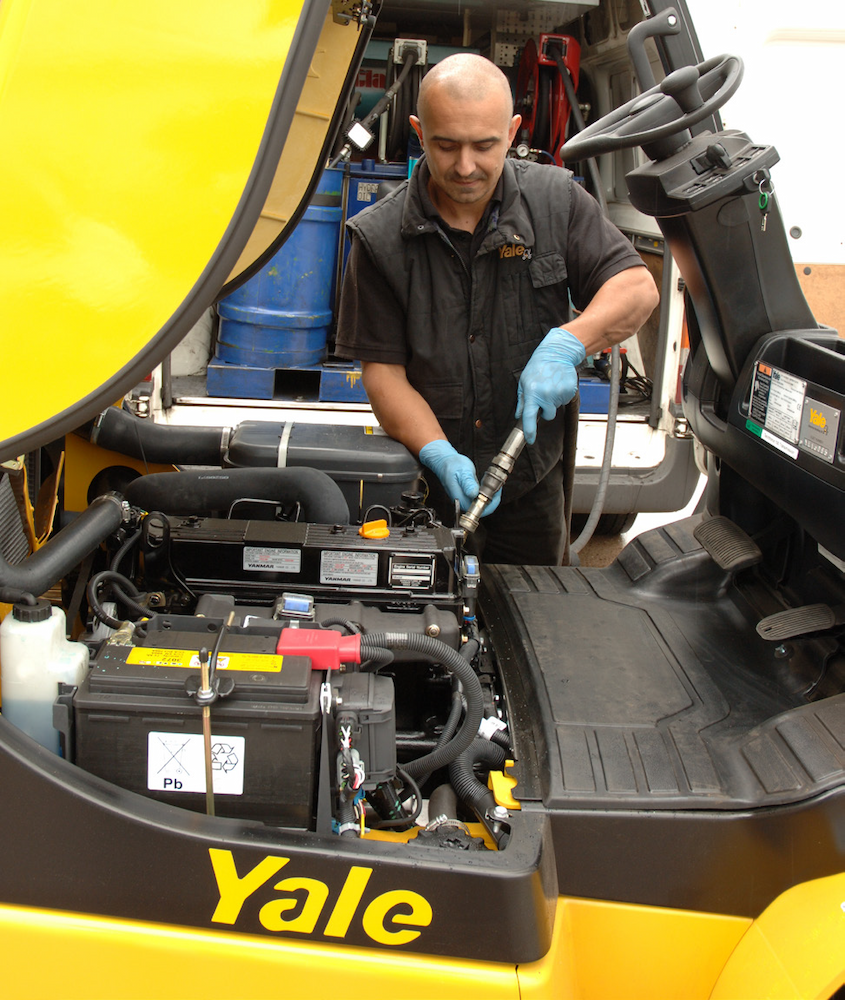
Safety is not just related to operator behavior. Maintenance plays a major role in creating a safer and more productive work environment. When something as common as an oil leak causes someone to slip, both downtime and lost productivity occur. By executing a periodic maintenance (PM) program, organizations are not only ensuring that each lift truck receives timely, thorough inspections, but are also helping to assure that equipment is operating at peak efficiency.
Often lift truck dealers and OEMs offer turnkey PM programs so that organizations can focus on their core competencies, rather than equipment maintenance. And the financial impact of a program that does not include PM can be huge because it’s the law. OSHA requires daily maintenance checks on lift trucks, and failure to meet regulatory requirements can result in violation fines, sometimes as much as $70,000 for a repeat or willful violation.
Another thing to keep in mind is that when a lift truck is temporarily unavailable due to PM or another issue, it is important not to fill the gap with just any truck. This can put the operator and others at risk by using a piece of equipment that isn’t designed for a specific task. A turnkey PM program can ensure that an operation has the correctly configured backup trucks available.
Asset Management Tools Provide Another Set of Eyes
Technology can also help companies manage their assets and maintenance programs. Remote data monitoring equipment makes critical maintenance data accessible from any location at any time. These telemetry tools include sensors affixed to lift trucks that wirelessly send alerts to laptops and mobile devices. The alerts may include fault codes, scheduled PM notifications, or hazardous driving behaviors, such as excessive speed or impacts. Having access to this kind of data allows organizations to isolate and work on remediating problem areas, as well as reinforcing ideal behaviors to increase safety.
To add a heightened layer of monitoring, some telemetry units are available with a GPS enhancement. Insights gained from this GPS data can identify safe and efficient routes to influence facility layout and traffic management.
Yale offers a satellite-based GPS functionality for its Yale Vision wireless asset management system. This enhancement is designed to provide real-time insights about lift truck activity, location, and faults – invaluable data that fuels informed immediate safety decisions. Additionally, to prevent unauthorized access to trucks, Yale Vision can be set up to prevent access by an untrained operator.
Engineering Comfort and Control Where it Counts
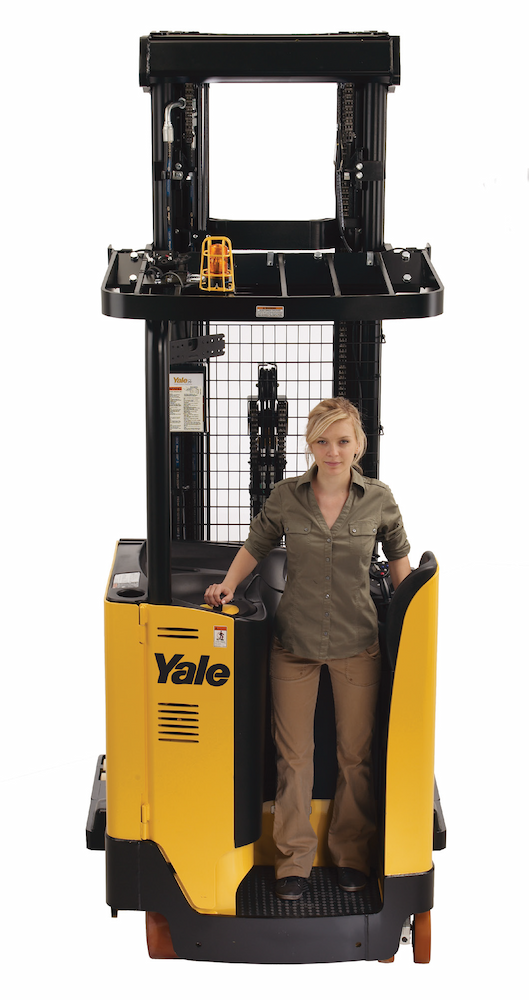
Ergonomics is critical to a safe work environment. A comfortable, less-fatigued lift truck operator possesses greater situational awareness and can be more productive. Since operators spend the vast majority of their time sitting, standing, and twisting, ergonomics are key for enhancing comfort and productivity.
Lift truck manufacturers have made significant strides in the development of ergonomic, operator-friendly features that complement safe materials handling practices. Some of these features include:
- Adjustable contoured armrests
- Adjustable steering columns with programmable tilt memory
- Fingertip controls for easy accessibility
- Electric power steering for reducing road - shock through the steering wheel/tiller
- Padded compartments for added comfort
- Flexible control and support surfaces so operators can adjust to the most comfortable position
Invest in a Safety Program
for everyone's benefit
According to a survey, 80 percent of companies do not monitor utilization by specific truck and driver. However, employers that do invest time to track and train lift truck operators on safety procedures and utilize durable, ergonomic equipment save time and money in the long run. In addition to having safe and happy employees, operations can expect financial returns thanks to lowered workers’ compensation costs, reduced medical expenses, avoidance of OSHA penalties, and a reduced need to keep training replacement employees.
For more information about tailored safety programs for your operation, contact your local Yale® dealer. Yale
National Forklift Safety Day
Because Safety Matters
Sponsored by the International Truck Association (ITA), National Forklift Safety Day provides an excellent opportunity for manufacturers to educate customers, policymakers, and administrators on forklift safety practices and the importance of operator training. Each year, these groups gather in Washington, D.C. for this nationally recognized event, bringing greater awareness to the importance of lift truck safety.
In honor of National Forklift Safety Day, Yale offers a list of safety tips based on OSHA regulations, designed to foster a safe work environment:
Forklift Loads
When parked or left unattended, a forklift’s load should be fully lowered, controls neutralized, power shut off and brakes set.
Parked on an Incline
If a forklift is parked or left unattended on an incline, the wheels should also be blocked.
No Freight Door Opening
Forklifts should not be used for opening or closing freight doors.
A safe Distance
A safe distance of approximately three truck lengths from the truck ahead should be maintained between forklifts.
Sound the horn
Forklift operators should slow down and sound the horn at cross aisles and other locations where visibility is obstructed.
Obstructed Forward View
If the load carried obstructs forward view, the operator should travel with the load trailing the forklift, always looking in the direction of travel.