How to Read a Forklift Data Plate (and Why It Matters)
This metal tag can tell you a lot about your machine
Every forklift comes with a data plate, also called a nameplate or capacity plate. It might not look flashy, but that metal tag carries a lot of power - it tells you everything you need to know to operate your equipment safely and within limits.
Finding And Reading The Plate
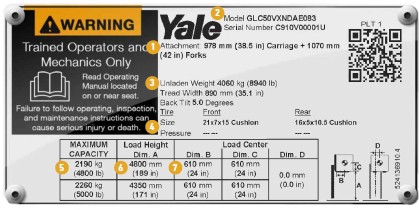
The location of the nameplate varies by make and model, but it is usually found on the frame near the steering column or dashboard. Once you’ve located it, here is the information you will find:
- Weight of the truck
- Fuel type
- Maximum load capacity
- Lift height
- Attachment info
- Tire type
- Battery specs (for electric models)
At the core of the data plate is the load capacity section. It explains how much weight the forklift can safely lift to a certain height with a specific load center.
A typical rating might look like this: 5,000 lb @ 24 in. load center @ 189 in. lift height
This tells you the truck can lift 5,000 pounds if the load is centered 24 inches from the backrest, and you’re lifting no higher than 189 inches. Change any of those factors - say the load is bulkier or you’re lifting to a second-tier rack - and your safe capacity may drop significantly.
Attachments And Their Impact
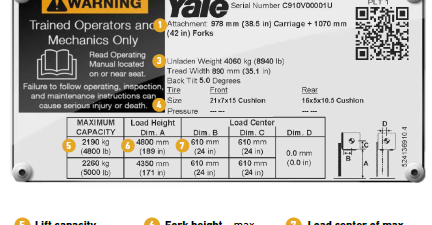
Forklifts often use attachments like carton clamps, rotators or side-shifters. These tools are useful - but they add weight and change the way the truck handles loads. The data plate must reflect any added attachments and show revised capacity numbers. If the attachment was added after the forklift left the factory, you are required to get a new nameplate from the dealer or manufacturer.
Skipping this step creates blind spots for your operator. Without accurate data, they could overload the machine without knowing it.
Electric Forklifts: What's Different?
If you're operating an electric model, you’ll see extra details specific to its power system. This includes minimum battery weight, voltage and amperage. These aren’t just numbers - they directly affect how stable your lift is. Using the wrong battery (especially one that’s too light) can throw off the truck’s balance and cause a tip-over.
It also matters when it comes to charging. The data plate helps ensure your charging equipment is matched correctly, avoiding power issues or damage to the truck’s system.
Why The Data Plate Matters
When operators overlook or ignore the nameplate, they put themselves and others at risk. The data plate tells you if the load is too heavy, if your lift height is safe, or if that new clamp attachment changes how the truck should be used. This information prevents tip-overs, equipment damage and serious injuries.
It’s also part of OSHA and ANSI requirements. A certified forklift driver must know how to locate the nameplate, understand its content and operate the truck within those limits. Making this part of your daily safety checks helps build a workplace culture that values preparation and awareness.
Making It Part of Your Process
Checking the nameplate should be as routine as buckling your seatbelt. It’s fast, it’s easy and it makes a measurable difference in safety and compliance. When teams take the time to review the plate - especially after switching attachments or moving between trucks - they’re more confident and less likely to make costly errors.
If a truck doesn’t have a readable nameplate, don’t guess. Take it out of service and contact your equipment partner to get the correct plate installed.
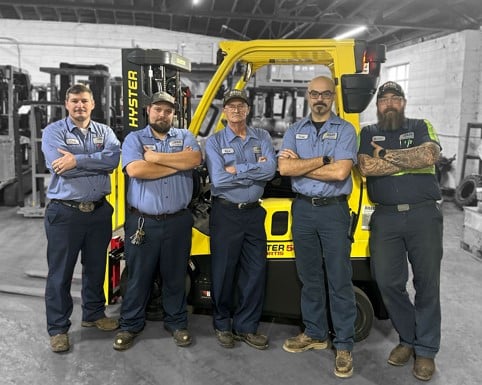
If you need help reviewing your fleet’s nameplates or updating them for new attachments Riekes Equipment can walk you through the process and get the right data plate for every truck in your operation.