IMPROVING DC METRICS
Best practices to optimize distribution center operations and lift truck fleet utilization
Whether replenishing retail locations or facilitating direct-to-consumer deliveries, you’re tasked with moving inventory more efficiently than ever to meet growing demand, making accuracy and flexibility imperative.
And in order to perform as a modern supply chain operation, metrics are critical to help you identify latent inefficiencies and power through daily work and peak challenges. But what distribution center (DC) metrics are most valuable? What should you lean on to shape business strategy and ultimately drive customer satisfaction?
This white paper presents top metrics from the 2019 Warehousing Education and Research Council (WERC) DC Measures Report, and highlights best practices and factors that can help you best leverage your lift truck fleet and elevate to best-in-class status.
Top 12 warehouse operational metrics
The 2019 WERC Report revealed a new top 12 metrics reported from warehouse professionals.
|
||
|
||
|
||
|
||
|
||
|
|
||
|
||
|
||
|
||
|
||
|
Lift truck operations and best-in-class
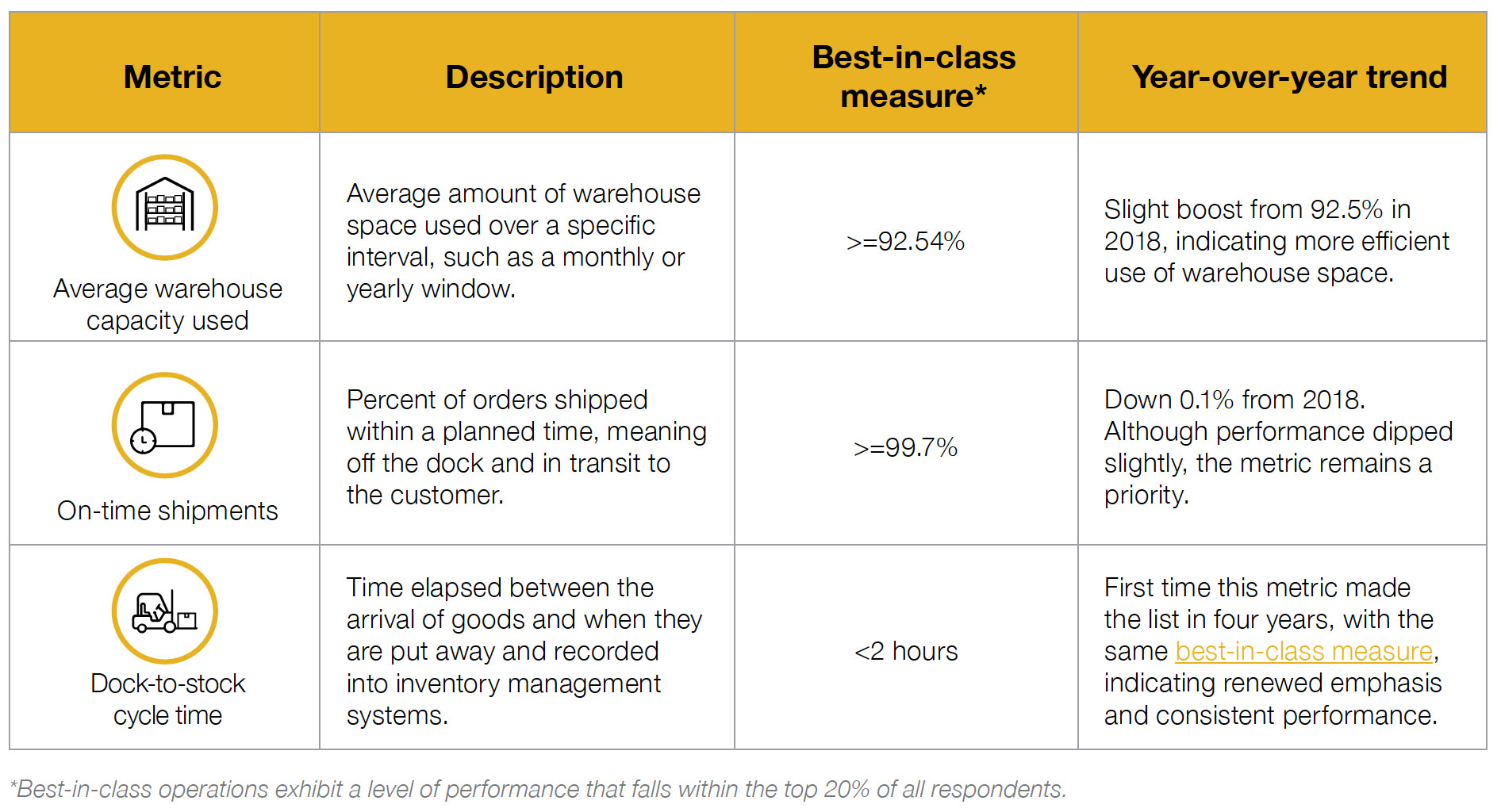
Lift truck operations identified several of the top DC metrics ranked as most important in the WERC Report, including average warehouse capacity used, on-time shipments and dock-to-stock cycle time. The table below summarizes what the 2019 WERC Report revealed as best-in-class performance for these metrics.

Metric: Average warehouse capacity used
Best-in-class operations, on average, utilize 92.54% of available warehouse space. Optimized lift truck fleets integrated with optimized slotting and inventory strategies, can provide maximum utility and flexibility to respond to shifting business conditions. Best practices that support optimization include:
- Implementing slotting and storage strategies
- Using cross-docking
Implementing slotting and storage strategies
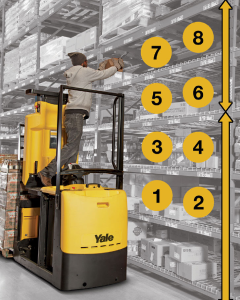
Growing SKUs and order counts can complicate efficient use of space. These conditions can force DCs to expand their picking footprint, reduce slot sizes and reduce inventory in each pick slot, risking decreased efficiency and productivity. Conducting a slotting analysis can determine the optimal storage space and location for each item — some of which might be at height. The conversation then shifts to enlisting the right equipment, with appropriate speed, dimensions and vertical heights to access the loads.
For instance, a multi-level order selector can raise operators vertically to expand the “golden zone” of the pick face. This can enable new slotting strategies to help increase pick positions up to 400% and slot capacity 140% within the same footprint.
Using cross-docking
Cross-docking involves transferring incoming merchandise from receiving directly to shipping — without spending time in storage. This workflow can help move goods more rapidly, reducing inventory levels and permitting for more efficient use of existing warehouse storage capacity.
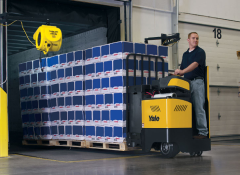

Metric: On-time shipments
Best-in-class operations ship more than 99.7% of orders on time, meaning off the dock and in transit to the customer. To reach this level of efficiency, operations must make sure lift truck fleets are running at peak efficiency, with minimal downtime. Three factors that can contribute to peak efficiency include:
- Using best-fit power solutions
- Delegating repetitive tasks to robotics
- Ensuring proper maintenance and parts availability
Using best-fit power solutions
Lift truck power options are now more robust than ever, with newer technologies like lithium-ion batteries and hydrogen fuels cells proving their worth. By implementing the right lift truck power source, operations can unlock greater productivity.
Traditional lead-acid batteries can suffer performance degradation during the second half of their charge, leaving operators with a less-capable lift truck. This can result in shipments leaving later than expected and other performance metrics to suffer.
Lithium-ion batteries and hydrogen fuel cells deliver consistent, maximum performance until full depletion, while offering fast refueling and flexible charging. Hydrogen fuel cell-powered lift trucks take just minutes to refuel, while lithium-ion batteries power longer and charge up to two times faster than lead acid.
Delegating repetitive tasks to robotics
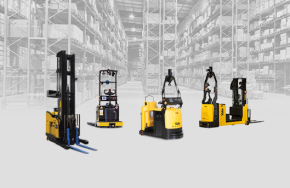
Advances in sensor technology and processing power permit robotics to pick up, transport and drop off pallets independently and reliability. By providing smooth, consistent operation of repetitive tasks, robotics allow for extended run times between charges, helping increase operational uptime and productivity, while reducing errors associated with misplaced or damaged goods.
Ensuring proper maintenance and parts availability
Factory-trained, certified technicians offer superior product knowledge to help keep lift trucks running and shipments moving. The combined geographic footprint of the lift truck original equipment manufacturer (OEM) and dealer network, affects service capacity and how quickly unscheduled service issues can be taken care of. The larger the dealer network, the faster the response, the less downtime.
Additionally, telemetry systems with fault-code monitoring can automatically contact the service organization to initiate maintenance if a fault code is triggered. This can prevent minor issues that may not be apparent to operators from escalating into more serious problems.
Metric: Dock-to-stock cycle time
According to the WERC Report, best-in-class operations are able to move inventory from the receiving dock to storage, and record it in inventory management systems in less than two hours. But operations are challenged with two major trends: accommodating growing SKU counts and deliveries, and labor shortages, leaving warehouse positions unfilled and turning over regularly. Best practices to enhance put away include:
- Automating high level put away with robotics
- Eliminating unnecessary product touches
Automating high level put away with robotics
Robotic lift trucks are ideal for facilities challenged with inventory growth as well as labor challenges. They not only help maximize vertical storage and allow for autonomous put away at locations over 30 feet high, but offer smooth, consistent operation, providing for extended run times between charges, translating into greater uptime and productivity. And with the ability to service double-deep pallet storage, robotic lift trucks can handle more pallets at a time, while systematically keeping product moving
Additionally, robotic lift trucks allow labor to be reassigned to more meaningful tasks, helping increase operational efficiency, and reduce turnover and onboarding costs.
Eliminating unnecessary product touches
Unnecessary product touches and movements are wasteful and slow cycle times. Using telemetry systems, operations can track movements to eliminate unnecessary steps, minimizing product touches and reducing put away times.