
Operator Assist System myths Busted
The truth about what the technology can do, and what it means for prioritizing safety on the warehouse floor.
Lift truck operator assist systems (OAS) are often misunderstood. Just another telemetry tool? A magic wand that makes equipment stronger or able to operate itself? Or a cumbersome tool that gets in the way of productivity? Read on for common OAS myths and the real story of this emerging category of lift truck solutions.
MYTH #1:
OAS is just another name for the telemetry systems lift truck manufacturers already have on the market.
Misleading! The truth is that OAS is an umbrella term that encompasses a variety of products and technologies designed to do exactly what the name suggests – assist operators. It includes telemetry and things like pedestrian awareness lights and alarms, automatic slow-down, lift lockout and so much more to help operators adhere to best practices that support safety and efficiency.
To further distinguish, telemetry captures and reports lift truck status and usage, providing the data to inform a more reactive approach to managing operator behavior. Other OAS features, however, can take a more active role, providing operators with real-time alerts and automatic performance limitations based on the real-world operating environment, load and equipment status, making it easier to adhere to best practices.
Yale Reliant™ is an industry-first solution that stands out among other OAS tools on the market because it offers a robust package of features designed to optimize lift truck operator performance and enhance operator confidence. These capabilities include line of sight support, location-based fork height restriction and speed controls, anti-tailgating speed reduction and more. And while the system implements performance reductions automatically, the operator retains ultimate control of the lift truck.
MYTH #2:
Having an OAS installed on your truck can risk reduced productivity and decreased throughput.
Busted! OAS is capable of both supporting site specific initiatives and maintaining productivity, rather than prioritizing one at the expense of the other. In fact, fast-paced e-commerce warehouses are well represented among the early adopters of OAS.
Yale Reliant prioritizes both productivity and lift truck operating best practices. For example, take the in-aisle muting feature. While lift trucks could be subject to performance reduction if they are in close proximity in main thoroughfares, the narrow nature of tight warehouse aisles means equipment cannot keep the same distance. In practice, the in-aisle muting capability can allow two trucks to work in the same aisle without slowing each other down.
Successfully deployed on over 2,700 trucks, Yale Reliant thrives in warehouses with high throughput expectations.
MYTH #3:
OAS is typically limited to ultrasonic technology for objet and pedestrian detection, so it cannot register all potential hazards in the environment.
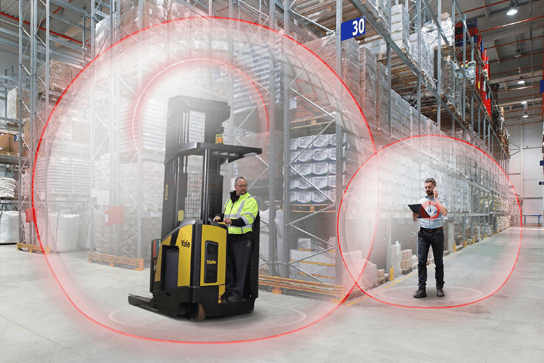
Not always! Many companies and OEMs use different technologies to detect objects, pedestrians or both. Technologies such as lidar, ultrawideband (UWB) and ultrasonic are all popular for these applications.
Yale Reliant is unique because it can use either single or multiple means of detection, depending on the goals and needs of the specific warehouse applications. While other OAS offerings may be limited to one type of detection technology, Yale Reliant can be configured with multiple detection technologies for a greater level of awareness tailored to the unique needs of each location.
MYTH #4:
Object and pedestrian detection only work in the path of travel and if the object or pedestrian is standing straight up or vertically.
Incorrect! While vision technologies like lidar and ultrasonic sensing can detect obstacles in the direction of their orientation, Yale Reliant-equipped trucks can be configured with multiple sensors to enable detection in the appropriate direction depending on truck and obstacle location. But what about unseen obstacles, such as a truck hidden inside of racking?
Yale Reliant offers line of site support that uses UWB technology to account for and react to objects equipped with a powered badge within a certain radius. You don’t want to miss a pedestrian about to step out of the end of an aisle as a truck approaches. Yale Reliant can slow lift truck speed to a crawl based on location specific rules as a way to discourage operators from entering certain areas, such as designated pedestrian zones, aisles, doorways and tunnels.
MYTH #5:
OAS reduces truck performance only to avoid obstacles.
False! Sure, it’s common for an OAS to enable features that help operators avoid hitting obstacles, such as reducing speed if an obstruction is detected or in response to location-based rules at intersections or high traffic areas. But with operators traveling quickly around corners carrying a risk of tip over, what about a feature designed to help operators maintain the stability of the lift truck and load?
Yale Reliant is the only OAS that offers true lateral stability when cornering. While other OAS offerings may reduce speed when making turns, only Yale Reliant decelerates equipment based on the combined center of gravity of both the truck and load.
MYTH #6:
OAS provides only audible and visible alerts.
Not true! Most OAS solutions deploy beeping sounds and flashing lights for various situations, but those can get lost in a loud and busy warehouse environment. What if alerts went a step further, enabling operators to “feel” what’s happening?
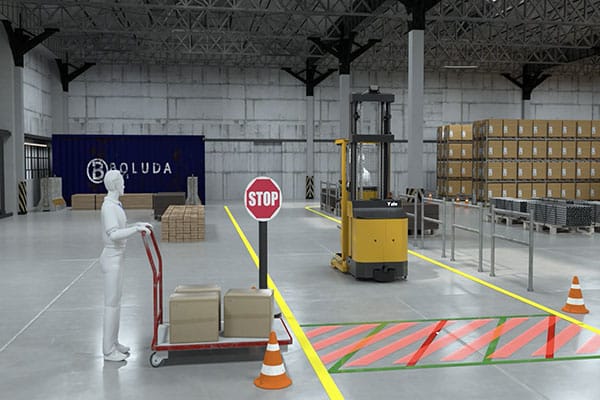
Yale Reliant adjusts the truck’s performance in real-time, alerting operators through the feeling of performance reduction, such as limited speed or an inability to raise forks. For example, when entering a zone designated as having heavy pedestrian traffic, the system proactively reduces travel speed to help alert the operator and improve situational awareness.
MYTH #7:
An OAS can expand load capacity, allowing trucks to go beyond their maximum load capacities.
Fake news! OAS does not enable extra load capacity. Instead, these systems help lift truck operators avoid lifting loads that exceed the lift truck’s capacity limit.
Yale Reliant offers load weight awareness, a feature that automatically stops lifting if load weight exceeds the truck’s threshold. Rather than just providing an audible or visual alert, Yale Reliant is unique among OAS solutions in that it does not just tell operators they are lifting a load that is too heavy – it simply prevents they from doing so.
MYTH #8:
OAS only applies performance controls based on other trucks, objects and pedestrians that are connected to the same technology.
Nope! While an OAS can use a network of ultra-wideband tags to sense equipment, personnel and infrastructure, a technology like lidar can offer an extra layer of detection to sense obstacles in the path of travel even if they are not connected to the same network of tags.
Yale Reliant leverages both lidar and ultra-wideband tags for detection. It also offers a real-time location sensing option using the same network of ultra-wideband proximity tags together with beacons set up throughout the facility to enable location-based rules like equipment exclusion zones and end-of-aisle slowdown.
Is it right for you?
OAS technology helps warehouses boost efficiency and adherence to lift truck operating best practices. But as with any new technology, figuring out what makes sense for your specific operation requires digging into details.