Riekes Supports Growing Food Distribution Operation to Thrive
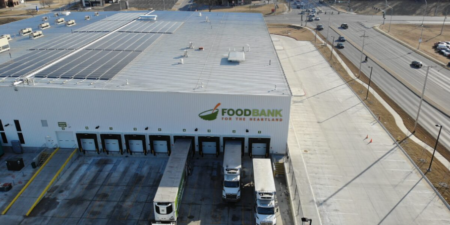
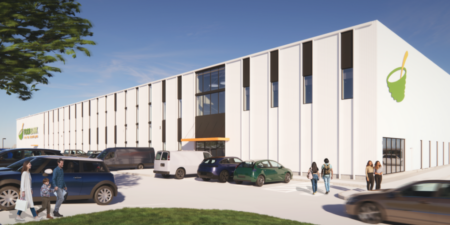
Food Bank for the Heartland, based in Omaha, Nebraska, was planning a new warehouse to keep up with growing demand across the region. With a long-standing relationship already in place, Riekes stepped in early to help support the project. The goal was clear: build a facility that could handle higher volumes, faster movement and more frequent deliveries.
Since opening in 1981, the Food Bank has seen major growth. That first year, they served 21 partners and distributed 38,800 pounds of food. By 2023, they were serving 555 partners and distributing more than 26 million pounds. With annual volume expected to reach 30 million pounds soon, their existing warehouse could no longer keep up.
INITIAL CHALLENGE
The Food Bank faced a series of limitations in their existing facility. The cooler and freezer areas were both too small and created traffic jams during busy times. The freezer had become a major bottleneck, slowing down staff and increasing handling time. In addition, storage space throughout the building was maxed out. Ceilings were only 20 feet high, and the structural columns made racking and forklift access difficult.
There simply wasn’t enough room for staging pallets which caused frequent slowdowns. In many cases, they had to rely on off-site storage, increasing transportation costs and delays. Another challenge involved their volunteers. Since volunteers play a big role in operations, the space needed to be not only productive but also safe and accessible.
OUR SOLUTION
Riekes assembled a team of eight warehouse experts who spent four days onsite surveying operations and gathering input from everyone involved, from leadership to frontline staff. From there, Riekes partnered with the Food Bank’s warehouse and logistics teams, along with the facility architect, to design a new layout that supported the full operation from receiving to shipping.
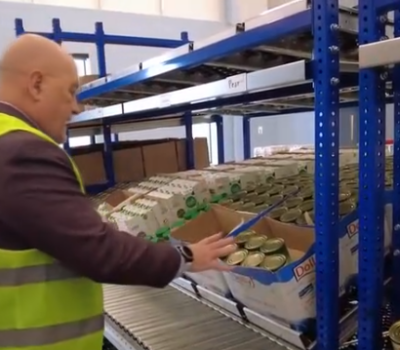
The plan was to increase pallet storage by more than 50%, reducing their need for off-site space and cutting costs tied to transportation. To support this plan, the recommended racking system included a mix of selective and pushback racks. This approach balanced dense storage with easy access to individual pallets. It also supports first-in, first-out rotation, helping the Food Bank move inventory safely and efficiently. Working closely with the architect, Riekes placed overhead doors in locations that match the desired workflow. At the same time, the team coordinated power paths for equipment such as stretch wrappers and scales to ensure the building infrastructure supported daily productivity.
The space is also more volunteer friendly. Visitors can tour the facility, view operations and engage with the mission, without interfering with work or risking safety. Riekes designed a clear and secure walking path so visitors and community partners can tour the facility without disrupting operations. “One out of every six pounds of food is somehow handled by a volunteer,” said Brian Barks, Heartland's President and CEO. The final layout allows staff and volunteers to work side by side in a space built for both purpose and performance.
THE RESULTS
With the new layout in place, the Food Bank opened a facility that could more efficiently keep pace with their growth. Riekes replaced the original 20-foot ceilings with new 30-foot heights, eliminating all interior columns in the racking areas using a clear-span structure. These vital changes make better use of vertical space, simplify rack placement and improve forklift access throughout the building.
Cooler storage capacity more than tripled, growing from 96 to 308 pallet positions. Freezer capacity also expanded significantly, from 250 to 670 pallets. Both the cooler and freezer were designed with future growth in mind, allowing for a 50% capacity increase down the road without needing a full redesign.
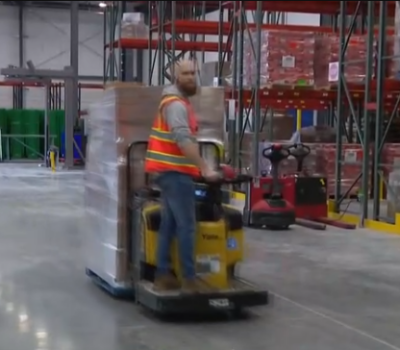
Riekes addressed traffic flow by creating larger staging zones near the docks for both inbound and outbound pallets. These areas allow staff to move materials more efficiently and avoid delays caused by congestion during busy periods. Forklift operators can move freely, and food can flow in and out more smoothly than before. Riekes delivered a warehouse that works better for today and is ready for tomorrow.