
THE ADOPTION OF HYDROGEN FUEL CELL POWERED LIFT TRUCKS
Maturing technology makes financial and operational sense
What if your materials handling operation could achieve higher operational productivity, eliminate cumbersome battery charging infrastructure, and deliver consistently high performance? Well, it’s possible with lift trucks powered by hydrogen fuel cells, and today’s materials handling industry is the perfect fit for this innovative power solution.
Large, successful organizations are integrating fuel cell technology into their lift truck fleets and benefiting from the lower operational costs, reduced emissions, and improved reliability.
Now, major lift truck brands are bringing fuel cell technology in-house, with ultimate plans to offer hydrogen lift truck solutions with factory warranty coverage and supporting infrastructure.
This white paper examines the adoption of hydrogen fuel cell-powered lift trucks, the availability of hydrogen, and the benefits and best-suited applications for this impressive technology.
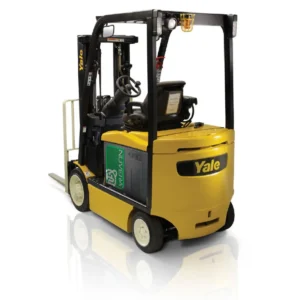
It Starts with the Basics
A fuel cell is an energy conversion device used to capture and use the power of hydrogen. It produces electricity from hydrogen and oxygen, with water vapor and heat as the only byproducts. Since these byproducts don’t produce any emissions or pollutants, hydrogen fuel cells serve as an ideal choice for warehouse, manufacturing, retail, and food applications.
A steady, cost-effective supply of hydrogen is critical to the success of any hydrogen-dependent operation and is an important requirement for any decision-maker considering the implementation of hydrogen fuel cell-powered lift trucks. To maintain hydrogen access, operations can rely on two different methods:
Hydrogen Shipments
One solution is to depend on regular hydrogen shipments from a chemical production plant. However, this method leaves operations vulnerable in the event of a missed shipment and requires users to manage fuel deliveries. Additionally, the emissions from transporting hydrogen to the point-of-use can offset the positive environmental impact.
On-Site Hydrogen Systems
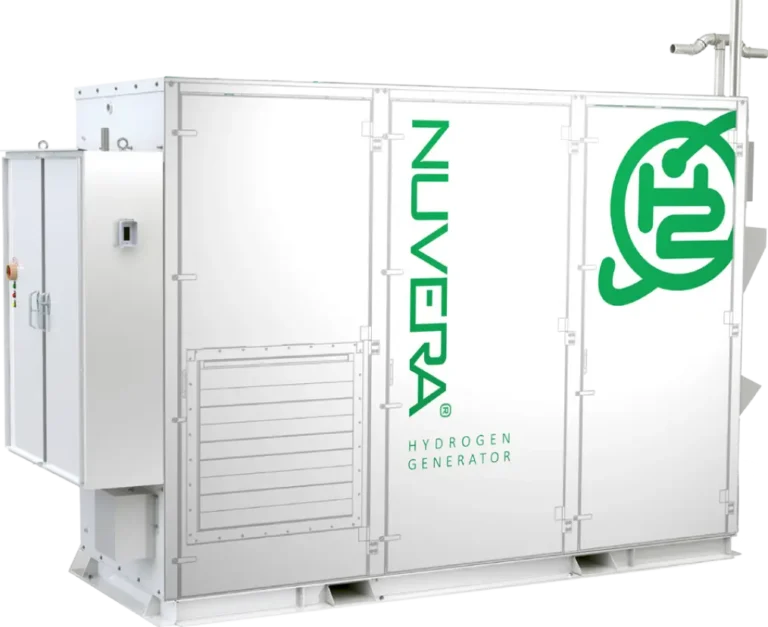
A more cost-effective, risk-averse and lower emission alternative is on-site hydrogen generation. Using a facility’s natural gas and municipal water connection, on-site hydrogen systems can offer complete compression, storage, and dispensing solutions to refuel lift trucks powered by hydrogen fuel cells. Scalable on-site generation systems can produce anywhere from 25 to 150 kilograms of hydrogen per day, making it a cost-effective solution for both modestly sized and large fleets. In all cases, an analysis should be conducted to determine whether hydrogen shipments or on-site hydrogen generation makes the most sense.
Four major benefits
Building the Business Case
With on-site hydrogen generation offering a viable fuel supply option, what can operations expect with a fleet of hydrogen fuel cell lift trucks?
INCREASED UPTIME
Currently, most electric lift trucks use lead-acid batteries. Once the battery charge expires, the battery must be removed and taken to a charging room, and a freshly charged battery must be installed. This equates to 20 minutes of lost productivity every four to eight hours. Hydrogen fuel cells can be rapidly refueled in just three minutes, similar to an internal combustion-powered lift truck. In multi-shift operations with two or more battery replacements per day, the quick refueling of hydrogen saves time and increases operator efficiency. Since lift truck operators can refuel hydrogen themselves, companies can make more efficient use of labor resources.
CONSTANT POWER
Hydrogen fuel cells deliver constant voltage until fuel tanks are depleted. This means that in normal operating conditions, fuel cell-powered lift trucks experience no performance degradation during the shift, running at full speed and reducing wear on truck motor controllers. Compared to battery-powered lift trucks that suffer performance degradation over the last half of the battery charge, hydrogen fuel cells offer sustained performance and improved component longevity.
SMALL FOOTPRINT
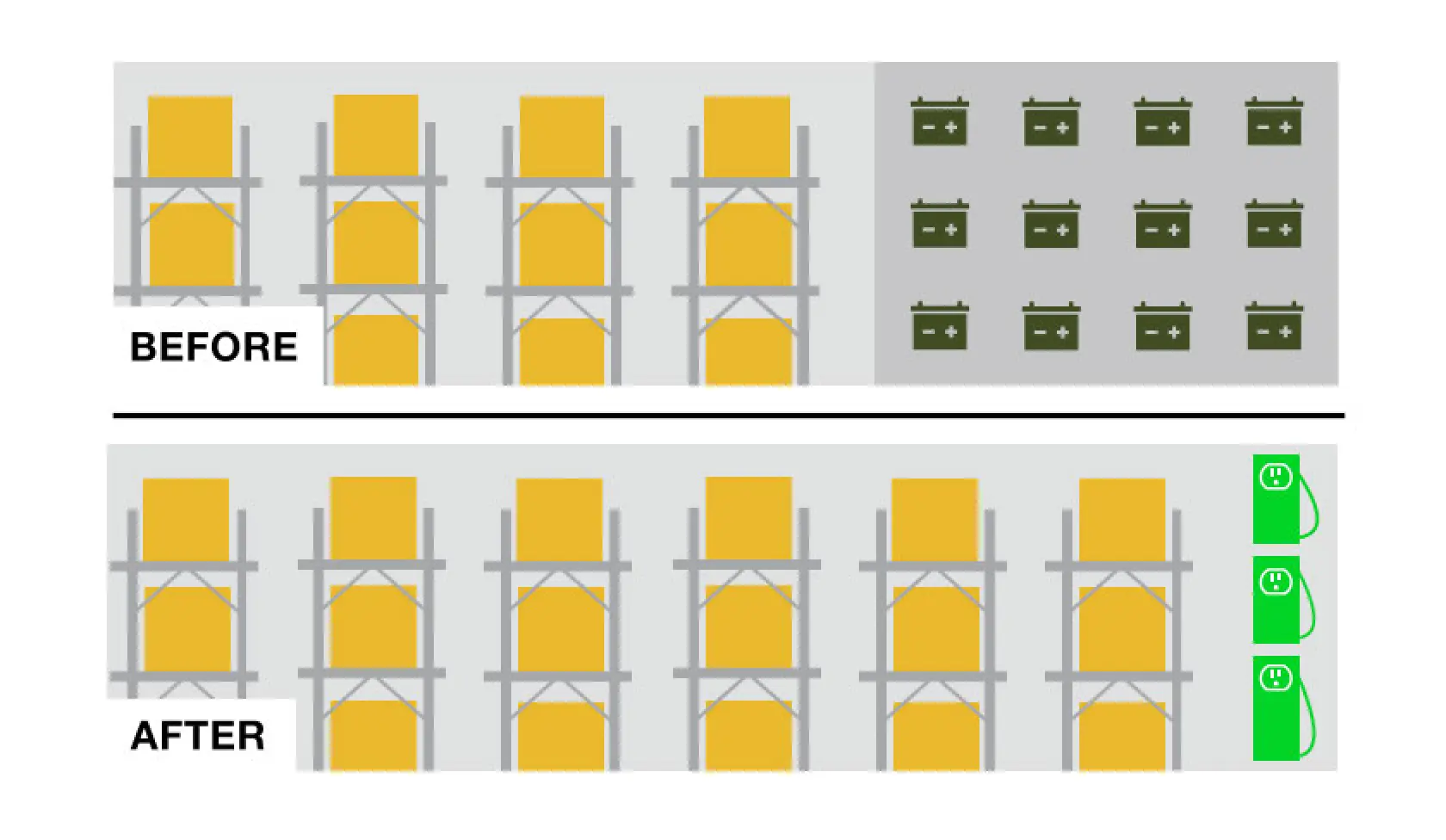
On-site hydrogen generation and fueling equipment consist of a compact hydrogen generator and auxiliary equipment located outside of the building, eliminating the significant indoor space required for battery charging and storage rooms. This enables more efficient use of existing space while growing throughput capacity and productivity. This is especially beneficial for operations located close to urban centers with higher real-estate costs, enabling them to avoid large capital expenditures, such as investing in a larger facility.
LOWER EMISSIONS
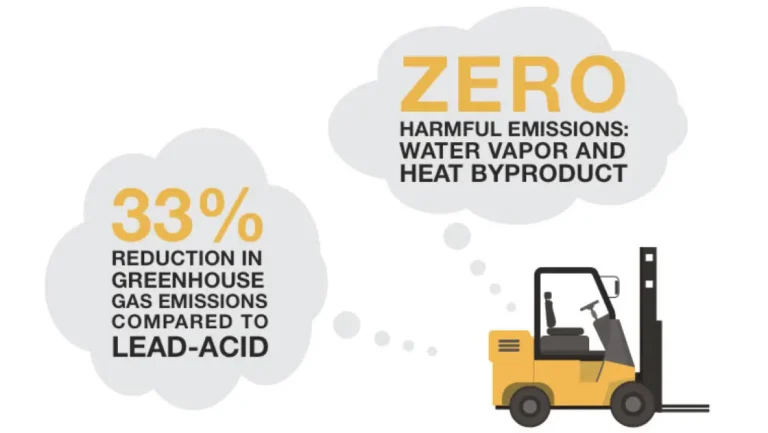
With only water vapor and heat as byproducts, hydrogen fuel cells produce zero harmful emissions. On average, companies that generate hydrogen on-site can expect a 33% reduction in greenhouse gas emissions compared to lead-acid systems charged from the electrical grid – a critical reduction for companies that strive to reduce their carbon footprint. The disposal of hydrogen batteries has benefits. Lead-acid batteries typically require replacement every 3-4 years. However, fuel cells only need replacement every ten years, resulting in a lower lifecycle cost, reduced disruption to operations, and minimal environmental impact.
Natural Gas Prices at Historic Lows
Natural gas prices are at historic lows, and its use for a variety of applications in several industries is becoming more widespread. This is great news for hydrogen fuel cell users, as hydrogen is produced from natural gas and its increased availability enables more customers to generate their own hydrogen.
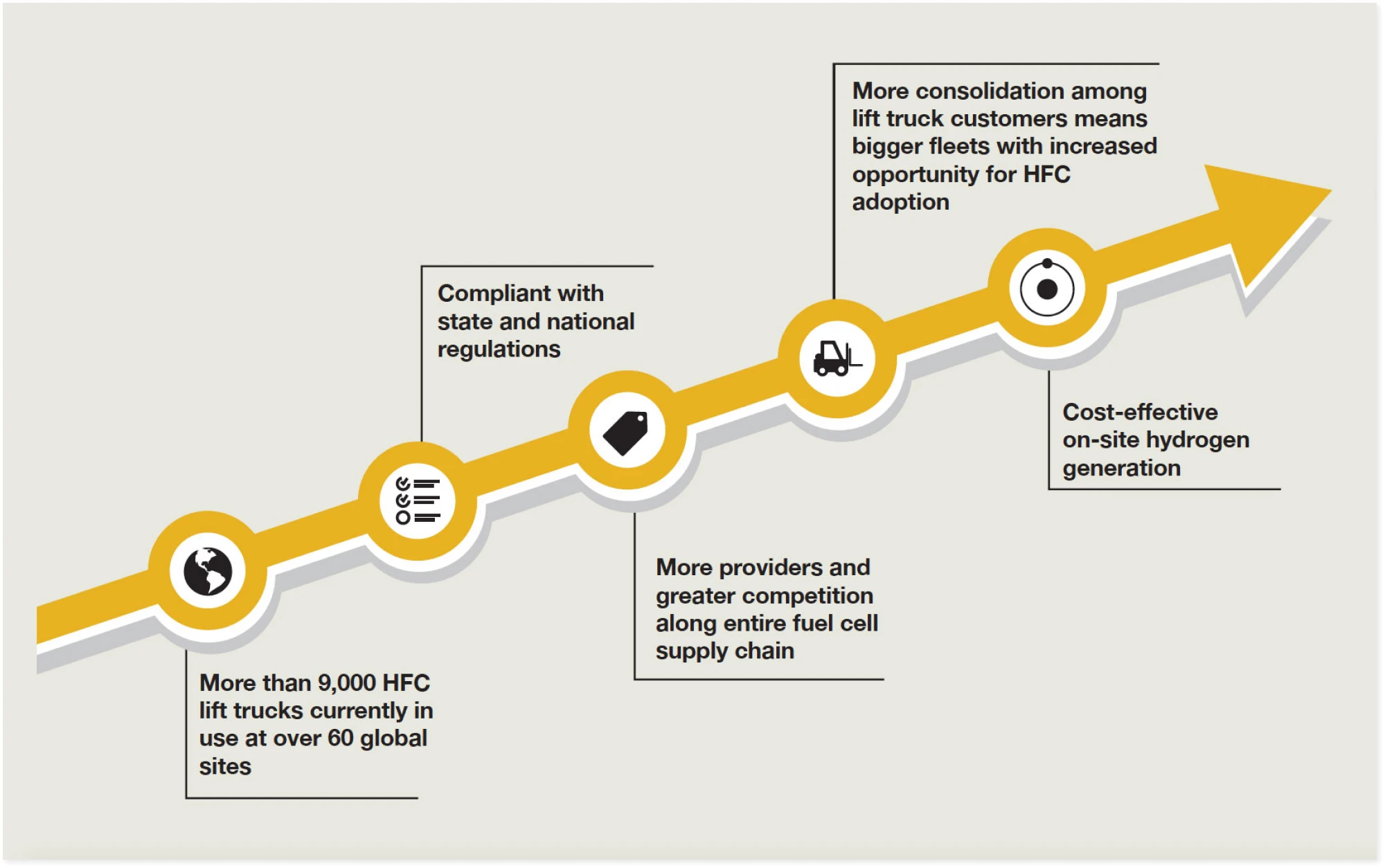
Adapt to Evolving Trends
Lift trucks powered by hydrogen fuel cells are an effective solution to address evolving industry trends in distribution and fulfillment. It is cost-effective option for increasing productivity.
Operations Best Suited for Adoption
A variety of factors make an application well suited for hydrogen fuel cell lift trucks. Some of the best opportunities include:
- Multi-shift operations that want to reduce battery replacement downtime and increase efficiency
- Growing operations that need additional indoor space to increase capacity
- Operations that want to reduce their carbon footprint
- Confined settings in which air quality is an important consideration to protect employee health
Making Operational, Environmental and Business Sense
In general, deploying hydrogen fuel cells can offer a cleaner, safer workplace and significant productivity and financial advantages over other electric lift truck options. Fuel cell-powered lift trucks offer a realistic, long-term solution that addresses the challenges facing material handling operations to reduce the total cost of operation and increase efficiency.
Combining these favorable conditions with consistent access to fuel with on-site hydrogen generation solutions, and further adoption of hydrogen fuel cell-powered lift trucks makes sound financial and environmental sense.