
Warehouse Palletizing Systems
improve productivity in a competitive labor market
Robotic palletizing or de-palletizing systems significantly increase productivity and profitability by reducing direct labor requirements/expense, the potential for injuries and provide other indirect savings.
Regardless if you are a manufacturer, a food processor, or manage a warehouse/distribution center, repetitively stacking box quantities on pallets is a task that can be automated with proven technology. Modern gripper systems allow drums, cases, bags and trays to be palletized quickly and accurately with repeatability utilizing spacers between layers when necessary.
Not only can a robotic system palletize various product sizes and types, but they are also flexible to be re-programed or re-tooled for companies that are consistently adding new products or package sizes.
ROI for a robotic palletizing system is typically 18-24 months
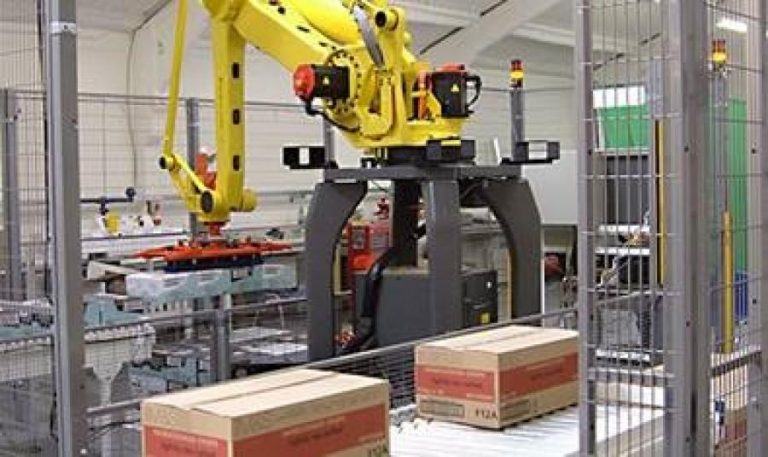
AUTOMATION IS NOT AS DIFFICULT OR COSTLY AS YOU MIGHT THINK
Too many businesses mistakenly believe robots aren't made for them and haven't looked at how robots can improve operational quality, productivity and safety. Don't be at a competitive disadvantage when on-time production is the goal.
Regardless of your industry, efficiently transporting materials in and out of your manufacturing process utilizing palletizing systems will make a big difference in labor requirements, time to market, unit costs and most importantly... your bottom line! Robotic palletizers can be integrated into a variety of applications including:
- Automated cells
- Assembly robotics
- Pick-and-place operation
- Robotic welding
- Fast-load collaborative cells
- Foundry & die casting
- Machine tool tending
- Material handling
- Robotic transport units
- Bending solutions
- Vision systems
There is a growing movement to fundamentally change the system, making the supply chain more resilient and workforce more productive. With a palletizing system, even small-volume production lines gain the benefits or consistency, precise and reliable technology.
BENEFITS OF PALLETIZING SYSTEMS
- Elimination of unscheduled line stoppages
- Fewer labor hours needed to complete same tasks
- Increased throughput (cases per hour)
- Fewer workmen’s comp claims and OSHA expenses
- Increased system availability
- Less damaged products at the end of a line
- Technology takes less floor space
- Reduced shipping and lower overall product costs
- Improved utilization rate of the complete production line
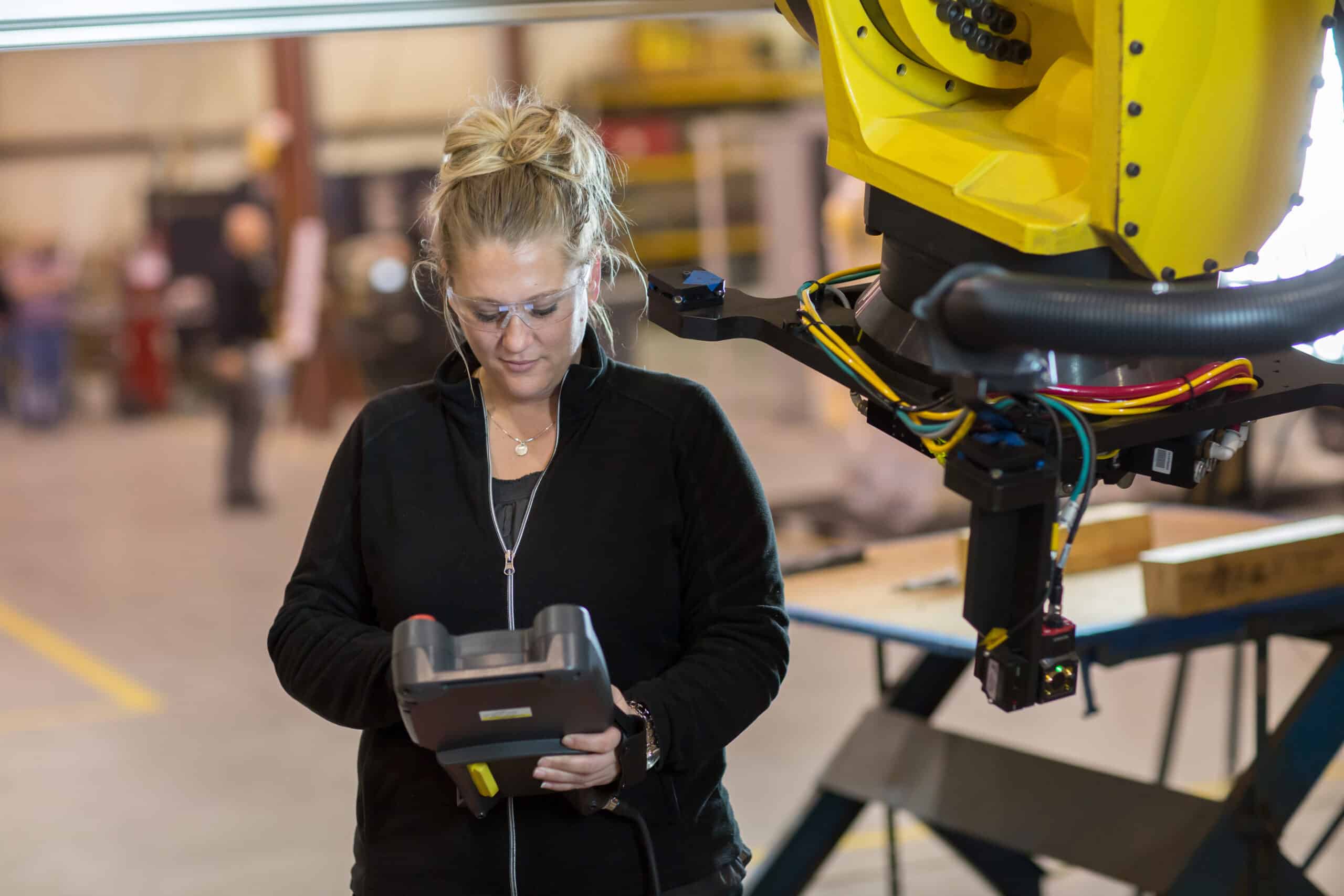
Schedule a consultation with an automation expert
WHAT IS PALLETIZING?
Palletizing is the process in which goods are stacked onto a pallet and prepared for shipping.
WHAT IS A PALLETIZING SYSTEM?
A palletizing system is any kind of automatic or robotic mechanism that sorts, positions and loads items onto a pallet. Palletizing systems can save time and money in a low-SKU, high-volume operation.
WHAT ARE THE DIFFERENT METHODS OF PALLETIZING?
There are three ways of palletizing: manual palletization, semi-automated palletization, and automated palletization. Manual palletization is the most expensive and slowest method. Automated palletization comes in a variety of types and you can customize it to your needs.
News & Announcements
OMAHA, Neb. – The Better Business Bureau of the Midwest Plains has named Riekes Equipment a 2026 Torch Award for Ethics recipient, recognizing exceptional commitment to integrity and ethical business…
In 2026, Riekes Equipment will celebrate 90 years in business, marking nine decades of helping warehouses, manufacturers and distribution centers improve safety, productivity and performance. Founded in 1936, Riekes entered…